
Today in History: The first successful non-direct blood transfusion is carried out
It took hundreds of years' worth of blood transfusions before the process was successful.

On this day in 1914, Belgian doctor Albert Hustin conducted the first non-direct blood transfusion, using sodium citrate as an anticoagulant.
Initially, blood transfusions needed to be made directly from the donor to the receiver before coagulation occurred. However, in the 1910s, it was discovered that adding anticoagulant to blood and refrigerating it allowed for longer storage times, which led to the establishment of blood banks.
The first recorded attempt of a blood transfusion was described by the 15th-century chronicler, Stefano Infessura. In 1492, Infessura noted that the blood of three boys was given to Pope Innocent VIII, who had fallen into a coma.
Following orders from a physician, the blood was transferred to the pontiff through the mouth, as the concept of intravenous circulation had not yet been discovered. The three young blood donors, all ten years old, had undertaken this experiment after being promised a ducat each. Unfortunately, the Pope and all three boys died.
The first fully-documented human blood transfusion occurred on 15 June 1667, and was administered by Dr Jean-Baptiste Denis. A physician to King Louis XIV of France, Denis transfused the blood of a sheep into a 15-year old boy. Although the boy initially recovered, the transfusion was not entirely successful and the boy died at a later stage.
It was only in the 19th century that the existence of different blood types was discovered, and therefore the reason for past transfusion failures. It was found that a mixture of blood from the donor and the receiver was more successful in a transfusion.
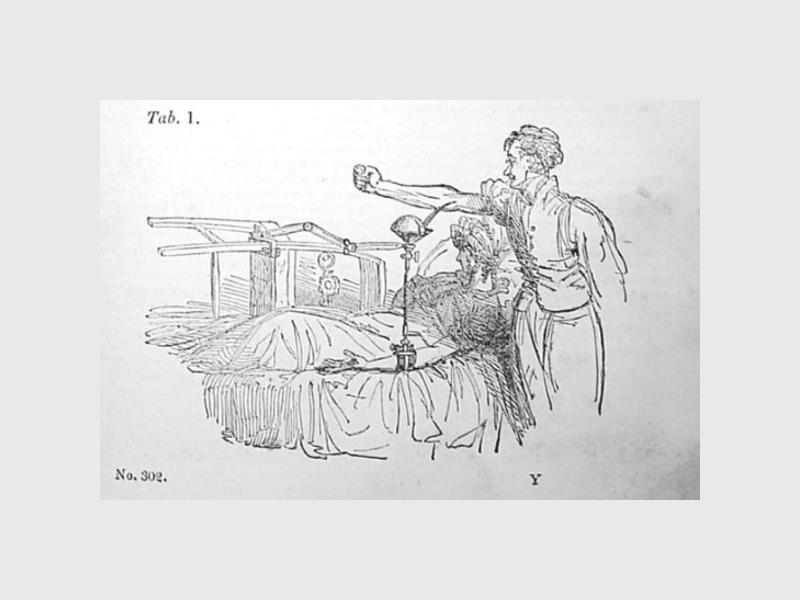
Dr James Blundell, a British obstetrician, performed the first successful transfusion of human blood in 1818, in treating a postpartum haemorrhage. The patient’s husband was the donor, and gave four ounces of blood from his arm to his wife. From 1825 to 1830, Blundell conducted 10 blood transfusions, of which five were successful.
On 1 January 1916, the first blood transfusion that utilised blood that had been stored and refrigerated was performed by Oswald Hope Robertson, a medical researcher and US Army officer. Robertson is generally credited with establishing the first blood bank while serving in France during World War I.
Information courtesy of: https://www.sahistory.org.za/dated-event/first-successful-non-direct-blood-transfusion-carried-out.


