
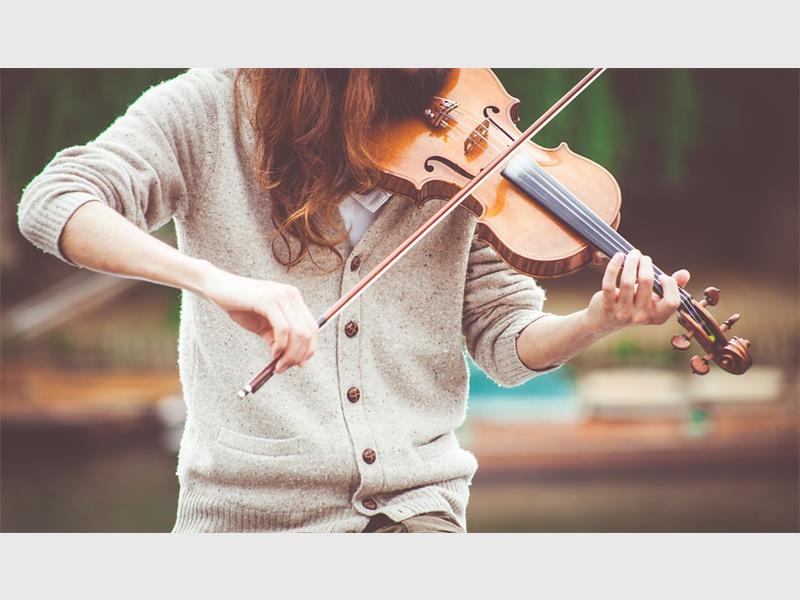
13 December is National Violin Day, a day that honours the bowed string instrument also known as the fiddle.
The violinist produces music from the violin by using a variety of techniques. The sound is manipulated by the violinist drawing the bow across the strings of the violin to produce a broad range of notes. Through the generations, the violin’s versatility has been demonstrated by its extensive use in many genres, such as baroque music, classical, folk music, rock ‘n’ roll and soft rock. The word violin is derived from the Latin word vitula, which means stringed instrument.
The violin does have some ancient origins but most of its modern characteristics can be traced back to the 16th century in Italy – with some modifications in the 18th and 19th centuries.
The world’s earliest fiddlers are believed to be Turkic and Mongolian horsemen from Inner Asia whose two-stringed upright fiddles were strung with horsehair. These fiddles, that often featured a carved horse’s head at the end of the neck, were played with horsehair bows. The bows of many modern violins, violas and cellos are still strung with horsehair – a legacy of the nomads.
Some interesting violin facts:
– The oldest documented four-string violin was constructed by Andrea Amati in 1555.
– Lady Blunt, a Stradivarius violin, was sold at an auction on 20 June 2011 for the record amount of US $15,9 million.
– Stradivarius violins constitute one of the most sought after classes of instruments to both collectors and musicians.
To celebrate today, pop in your favourite CD and let the soothing sounds of violin music fill the air.
Use #NationalViolinDay to post on social media.
Do you perhaps have more information pertaining to this story? Email us at roodepoortrecord@caxton.co.za (remember to include your contact details) or phone us on 011 955 1130.
For free daily local news on the West Rand, also visit our sister newspaper websites
Remember to visit our Facebook, Twitter and Instagram pages to let your voice be heard!


One Comment