

More scientific studies are set to be conducted in an effort to establish the actual cause and source of the underground water in Ward 89.
The preliminary results of the first phase of a study being conducted by Digital Soils Africa (DSA) have been revealed.
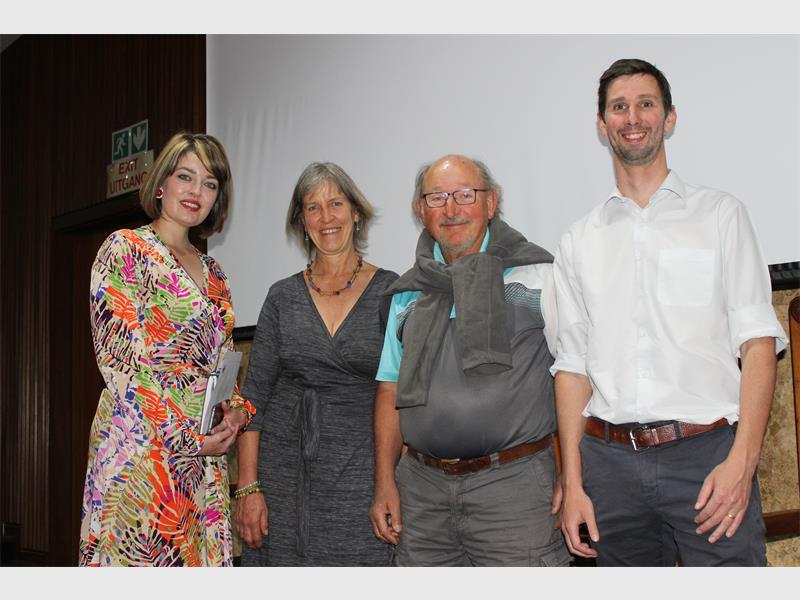
The initial results were presented during a Ward 89 public meeting on Wednesday, 4 September at the Roodepoort Civic Centre, during which DSA representatives, Darren Bouwer, a soil scientist, and Professor Pieter le Roux, a specialist in Hydropedology, explained their scientific findings about the problem to the public and funders of the project – the Johannesburg Roads Agency (JRA) and the Environment and Infrastructure Services Department (EISD) in the City of Johannesburg.

The underground water crisis is a long-standing issue which has always been on Ward 89 councillor Amelia Bester’s agenda. This water has created a lot of frustration among residents as it seeps from underneath the surface and runs into downhill areas causing damage to road infrastructure as well as some properties.
Areas affected are Fairland, Constantia Kloof and the Ruimsig corridor.
According to the current research, the water oozes at a rapid rate of 12 litres a minute.
“The scientific study showed a large amount of water flowing underground. The study also showed that the water isn’t connected to the soil but to an underground source, but this source is not the regional ground water table (i.e. water found in boreholes),” said Darren, who also elaborated on the different types of soils that they were dealing with during his presentation to the public.
Jane Eagle, the EISD acting director in the Water and Biodiversity department, reflected on the initial study before shedding light on what Phase 2 entailed. “The project has given us information about the underground water problem. It has also told us a lot more about the soils and water pathways, and has come up with a hypothesis about what is causing it and where the biggest source of the water is,” she said. She clarified that the study wasn’t definitive; which is why it has transitioned into Phase 2, during which geophysical and geohydrological tests will be conducted in the hope of finding a better way to mitigate the problem”.
As the project heads into Phase 2, Darren detailed how they planned to achieve the results. “The authorities want to further the study to try and really understand what the drivers of the system are, and in that way we will be able to quantify the amount of water and come up with a more sustainable solution,” he explained.
While this costly study is under way, residents can continue to rely on JRA’s short-term solution of redirecting the water into French drains in a bid to protect the road infrastructure and properties.
Jane, who dismissed the notion that the underground water crisis was caused by the Rand Water pipeline project, added that once the study is complete, they will look at ways in which the water can be reused. “South Africa is a water-scarce country, so if it’s possible that this is clean water, we can then do something with it. We would look at how we would manage the water without depriving the environment that needs it downstream,” she explained.


