
Highly unlikely that female eagle will continue with current breeding cycle
The Roodekrans eagles have enjoyed fairly successful breeding cycles in recent years, and although sad, this scenario is not uncommon in the wild.
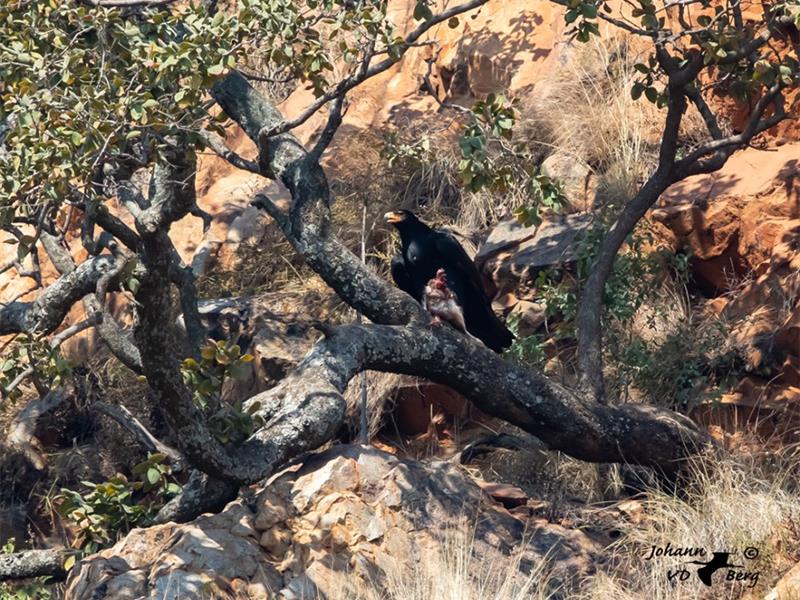

Responding to the numerous reports and discussion on various social media platforms, the Black Eagle Project Roodekrans (BEPR) has confirmed that the male eagle (Thulane) was last seen by the BEPR monitors on Saturday, 8 June, although there was an unconfirmed sighting of him by a member of the public at about midday on Sunday, 9 June.
The female eagle (Makatasa) has been on the nest incubating the eggs throughout this period, only leaving every few hours for between two and five minutes.
Read the initial article here:
https://roodepoortnorthsider.co.za/297253/thulane-has-gone-awol/
The first egg is expected to hatch on 11 or 12 June, and the second egg approximately four days later, on 14 or 15 June.
Extensive searches for signs of the male have been done in his known hunting areas, stretching from the R28 right up to the nesting site.
Initially the BEPR were not too concerned as Thulane has been known to “disappear”on occasions, sometimes for more than a day at a time.
As he has still not returned, it is highly unlikely that the female will continue with the current breeding cycle, and will probably abort shortly.
Also Read:
https://roodepoortnorthsider.co.za/297354/update-on-the-missing-eagle/
The Roodekrans eagles have enjoyed fairly successful breeding cycles in recent years, and although sad, this scenario is not uncommon in the wild.
Black Eagles have been breeding in the Walter Sisulu Garden since the 1940s, and since the official formation of the Black Eagle Project in 1992, two adult birds have been replaced.
Quatele disappeared in 1999 and was replaced by Thulane, and Emonyeni, who disappeared in 2016, was replaced by Makatsa.
Gerald Draper, Chairman of the BEPR said. “We will continue to monitor the situation and communicate as and when any developments unfold.”


