
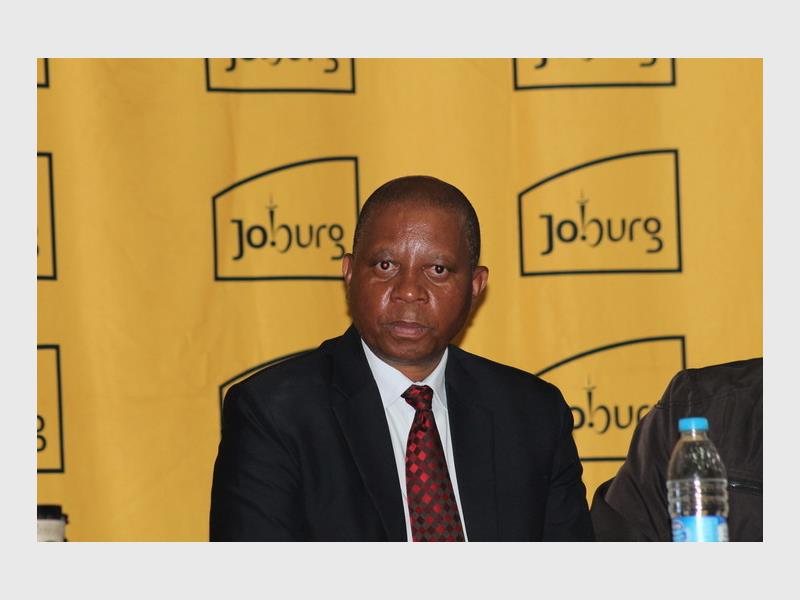

The City of Johannesburg’s Executive Mayor, Herman Mashaba, delivered his State of the City Address (Soca) recently.
“Today, I stand before you to deliver the third State of the City Address under this multi-party government.”
This how Mashaba started with his Soca on Tuesday, 30 May at the Johannesburg Municipal offices, in Braamfontein.
Mashaba explained the challenges the council had faced and tackled, despite the severe backlogs.
He said, “Infrastructure backlogs exceeding R170 billion characterised the service delivery landscape. Four thousand kilometres of broken roads and 700 crumbling bridges arose from a R18 billion backlog in our transport network”.
He said housing is needed for those belonging to the missing middle class and those in need of student accommodation.
“A staggering housing backlog of over 300 000 units has led to a legacy of land desperation, backyard dwellings, and shack farming,” Mashaba said.
“Electricity outages produced from a R60 billion backlog in our electricity network results in over 170 000 power outages each year. We had to contend with water stoppages resulting from a water network backlog of R18 billion which sprang over 45 000 leaks, losing 107 billion litres of this precious resource, each year. We found just over 200 informal settlements in which our residents lived in the most appalling conditions,” he continued.
The government has increased Capex budget allocations for housing, transport, electricity, water and roads from 58 per cent in 2015/ 16 to 71 per cent in the 2019/ 20 budget.
“This is how our multi-party government has increased the budget for electrifying informal settlements from a feeble R260 million over three years, to a budget now proposing R750 million over the next three years,” Mashaba said.
Mashaba believes that during the coming financial year, the multi-party government will continue to focus on getting the basics of local government right.
“Under the theme of ‘Advancing Diphetogo’, we have committed ourselves to working harder to accelerate the City’s delivery of change to our residents,” he said.
“In 2018, the City of Johannesburg created 110 000 new jobs, reducing unemployment by 1,1 per cent. The economic growth rate of our City is growing for the first time in a long time. In the 2017/ 18 financial year, the economic growth rate increased from 1,4 per cent to 1,7 per cent. This, ladies and gentlemen, is real change,” he said.
In the 2016/ 17 financial year, the City achieved R4,5 billion in facilitated investments. By the end of the 2017/ 18 financial year, the City had facilitated investment worth R8,7 billion. Mashaba said the target for this current financial year is R16 billion and they are already heading towards that figure.
“Our unaudited level of facilitated investment stands at a record-breaking R12 billion, very much on track to achieve R16 billion by June 2019,” he said.
Mashaba’s SOCA highlighted some of the progress already made, including:
• 84 properties that have been released to the private sector for low-cost affordable accommodation, have a guaranteed level of investment of R20 billion, and will create 11 000 jobs in the city.
• Since the launch of the first Opportunity Centre in Marshalltown last year, three further Opportunity Centres in Roodepoort and Diepsloot, and the Orange Farm Business Centre in partnership with Discovery have been opened.
• In the past year, 200 youths underwent artisan training administered by the City as part of a joint pilot project with the University of Johannesburg.
• The Johannesburg Social Housing Company has also registered 7 377 youths through the Greater Eldorado Park Youth Skills Development Centre.
• The City has provided over 6 261 RDP units over the last two years.
• The multi-party government has increased spending on repairs and maintenance from 2 per cent spent on repairs and maintenance to over 5 per cent by the end of this financial year.
• Nearly 70km of gravel roads have been tarred to date, and the JRA has been allocated a staggering R1,2 billion to continue this work in the medium-term.
• Joburg Water has made 151 million litres of water available through stationary tanks in informal settlements in order to meet the very basic needs of some of our informal communities.
• 57 000 VIP toilets and 7 178 chemical toilets have been delivered and are being serviced routinely in informal settlements.
• The City has now extended the operating hours of 22 of its clinics, with a further 4 to be rolled out before the end of this financial year.
• 10 333 traffic operations were conducted by the JMPD across the City since the beginning of the last financial year.
• The K9 unit has seized nearly 460kg of drugs from our streets and continues to prove effective in waging war on the drug trade in Johannesburg.
• Through this intervention, the prosecution success rate within municipal courts has increased from 4 per cent in November 2018 to over 25 per cent in February 2019.
• The fine for illegal dumping has risen from R2 000 to R10 000.
Mashaba concluded his address by saying, “It is for these residents that we must understand that every day going forward is a further opportunity to bring change to the residents of Johannesburg. While the enormity of this task is daunting, our multi-party government derives its strength from the residents of Johannesburg. It is the delivery of change that drives this government, and the efforts to realise a day when all of our residents enjoy the prosperity and dignity that will come with this change.”


