
Today in History: The Trans-Kalahari Corridor is opened
It initially cost approximately 850 million Namibian dollars (US $115 million) and was officially opened in 1998.
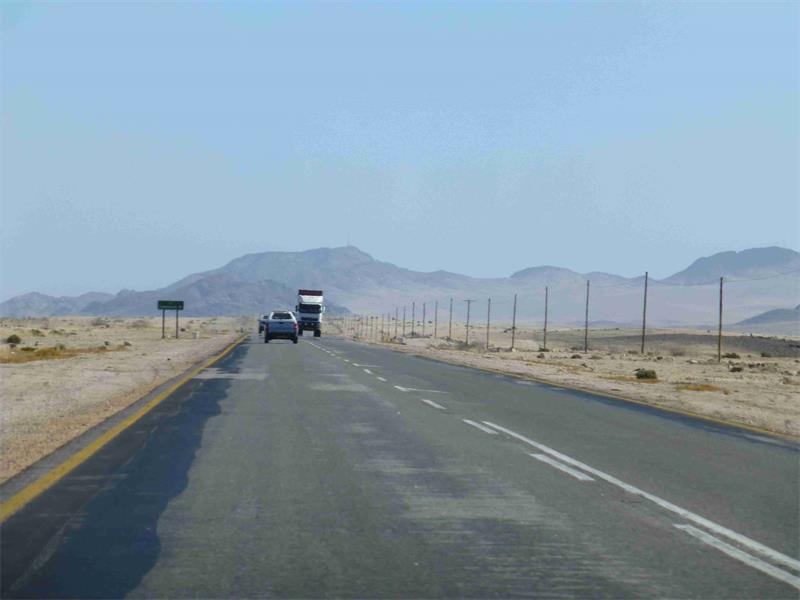

On this day in 1998, the first road in Africa south of the Sahara to connect the Atlantic and Indian Ocean, the Trans-Kalahari Corridor, was opened.
The Trans-Kalahari Corridor is a paved highway corridor that provides a direct route from Walvis Bay and Windhoek in central Namibia, through Botswana, to Johannesburg and Pretoria in Gauteng. The corridor also includes railway lines from Walvis Bay as far as Gobabis in Namibia, and from Johannesburg as far as Lobatse in Botswana.
The Maputo Corridor provides an onward connection from Gauteng to Maputo in Mozambique. Together these corridors form a unique road connection between Walvis Bay on the Atlantic and Maputo on the Indian Ocean; the connected regions are also known as the Walvis Bay–Botswana–Gauteng–Maputo development corridor.
In Namibia, the corridor is made up of the B2 from Walvis Bay through Swakopmund to Okahandja, the B1 from Okahandja to Windhoek, and the B6 from Windhoek through Gobabis to the Botswana border at Buitepos/ Mamuno. In Botswana it is called the A2 and runs through Jwaneng and Lobatse to the South African border at Pioneer Gate/ Skilpadshek.
In South Africa it follows the N4 through Rustenburg to Pretoria. The route Walvis Bay–Windhoek–Lobatse–Pretoria–Maputo is route number 40 in the Southern African Development Community Regional Trunk Road Network.
Information courtesy of: https://www.sahistory.org.za/dated-event/trans-kalahari-main-road-opened and https://en.wikipedia.org/wiki/Trans-Kalahari_Corridor#/media/File:The_B2_in_Namibia.jpg.


