
Local vendors reminisce about painful police raid
Samb lamented that he now had a huge debt after redeeming his goods. He has to repay the loan-shark from whom he borrowed the money.

The worst might be over for the legally compliant informal traders who found themselves ‘unfairly’ treated by law enforcement under the premise that they do not have permits to trade.
Such challenges will apparently be resolved after the new Informal Trader Policy is adopted by the City of Johannesburg.
The City, through its leaders and trader associations, still has the task of engaging the informal traders across all regions from March until June, through consultative workshops.
Also Read:
https://roodepoortrecord.co.za/2019/02/05/watch-law-enforcement-agencies-raid-non-compliant-traders-in-roodepoort/
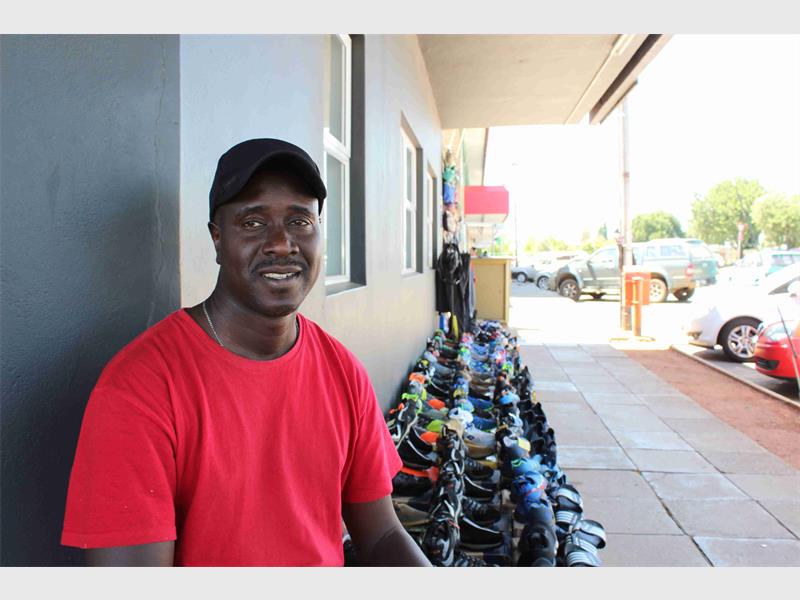
This move came as sweet news for some local traders such as the grief-stricken Joseph Samb, an informal trader who runs a shoe business in Witpoortjie.
This trader of 15 years outside the Caxton Jhb West building near the Witpoortjie Spar suffered the worst blow when his goods were confiscated by the Roodepoort Police in a clampdown on illegal trading.
According to Samb, who claimed he had to scrape up R3 000 to get his goods back, he was told by the officer in charge of the raid that he needed a hawker’s licence to operate and in addition to that, his items were being confiscated because they were counterfeit.
However, what puzzled many in the precinct, including him, was that he and other vendors that were affected were not operating on municipal land and had been given permission by the various building owners to operate outside their businesses, provided that they keep the space clean and lawful.
“I’ve been trading at this place for 15 years and I’ve never had a problem with the building owners. All I do is sell my goods and watch over the cars during the day and for that, I don’t need a licence,” he said.
Samb lamented that he now had a huge debt after redeeming his goods. He has to repay the loan-shark from whom he borrowed the money.
Another affected vendor, Mohammed Diouf, whose stand was also cleaned out by the police, claimed that the police had misused their powers. “This kind of thing has never happened to me in the 20 years I’ve been trading. They had no right to confiscate my goods because I have permission to trade here,” he alleged.
Since the Roodepoort Police seem to have misused their powers in this instance, the big question was ‘Would they be refunded the amount they paid to redeem their goods?’
When Roodepoort Police could not be reached for comment, the Caxton journalist approached the Johannesburg Metro Police Superintendent, Wandile Mrubata, who deals with enforcing by-laws in Region C. Mrubata advised the complainants to visit the By-law section at the JMPD office in the Johannesburg CDB. “If they feel that confiscating their goods and making them pay to get them back was unfair, or the amount was too much, they can go and complain at the JMPD office in Johannesburg for either a refund or a reduced fine,” he said.
He also advised building owners on private properties to provide the permitted hawkers with written and stamped permission letters which they may have to produce if they are confronted by law enforcement again. The vendors, in turn, were advised to keep the receipts for the goods they are reselling in the streets to avoid to be accused of selling counterfeit goods.
Do you perhaps have more information pertaining to this story? Email us at roodepoortrecord@caxton.co.za (remember to include your contact details) or phone us on 011 955 1130.
For free daily local news on the West Rand, also visit our sister newspaper websites
Remember to visit our Facebook, Twitter and Instagram pages to let your voice be heard!


