
The Albertina Sisulu Orchid, a wonder to behold
The orchid was named after Albertina Sisulu after the Sisulu family was consulted in 2015.
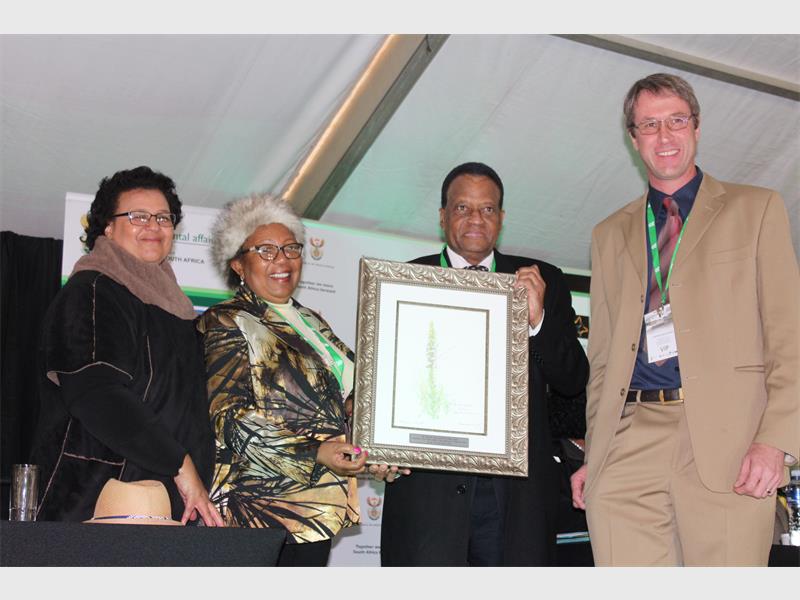

Exactly 100 years after its first discovery, the Brachychorythis conica subspecies transvaalensis was officially named the Albertina Sisulu Orchid earlier this year.
The orchid is considered to be critically endangered and has been placed on the Red List of critically endangered species. The orchid was first discovered in Pretoria in 1918, the same year the world discovered a woman who would rock the Apartheid struggle to its core.
Over the next 100 years, while Albertina Sisulu fought against the Apartheid regime, the orchid fought to stay alive with extremely scarce populations. It wasn’t until 1955 however, the same year Ma Sisulu joined the ANC Women’s League, that the orchid received its botanical name – Brachychorythis conica subspecies transvaalensis.

A year later and 1956 (the year Albertina Sisulu marched to the Union Buildings) would be the last time it would be seen for another 51 years, when it was found again by Andrew Hankey on a ridge bordering the Walter Sisulu Botanical Garden. Eleven years on from its rediscovery and we find ourselves in the midst of not only Ma Sisulu and Nelson Mandela’s centenaries, but also the orchid’s centenary.
In the 100 years since its first discovery, the orchid has only been recorded 17 times, of which 11 sightings have been in Gauteng. The other six instances have been in either Limpopo or Mpumalanga, with all of them along the provincial borders between the two provinces.

After its rediscovery in 2007, a ‘search party’ was launched in 2010 to try and track down more specimens of the orchid. As it turned out, specimens were found in Ogies and Witbank in Mpumalanga. From the data which was collected, they were able to identify 134 plants in the Krugersdorp population, the largest known Albertina Sisulu Orchid population.
The orchid only has a very short flowering period at the end of summer, and not all plants flower each year, making it extremely hard to find. Even though there are research measures in place, rehabilitation of the orchid is currently not possible.
Do you perhaps have more information pertaining to this story? Email us at roodepoortrecord@caxton.co.za (remember to include your contact details) or phone us on 011 955 1130.
For free daily local news on the West Rand, also visit our sister newspaper websites
Remember to visit our Facebook, Twitter and Instagram pages to let your voice be heard!


