
What happens when they catch you drinking and driving?
You will be arrested for being over the limit
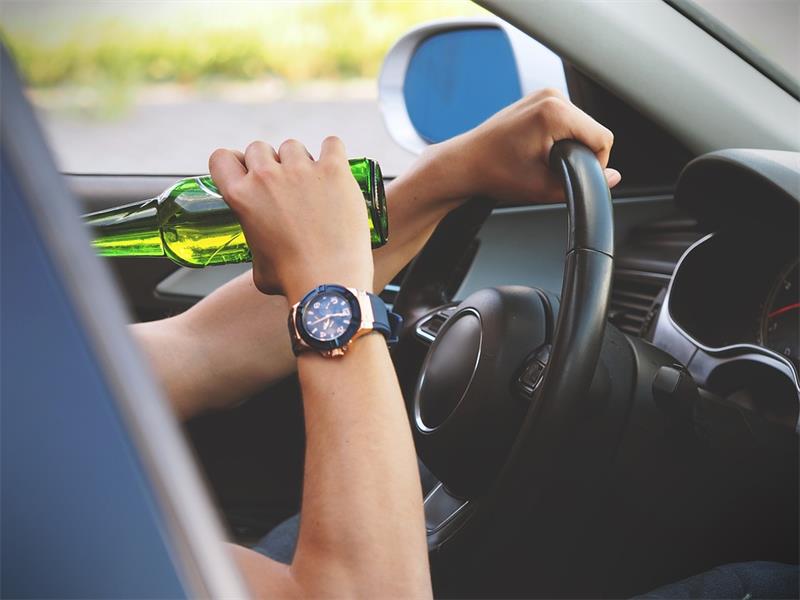

According to the MMC for Public Safety, councillor Michael Sun, during the weekend that ended on Sunday, 21 October, JMPD arrested 176 drivers for driving under the influence of alcohol across the City of Johannesburg.
A list of how many drivers were arrested in each region follows:
Region A – 24 (Northern Johannesburg), Midrand, Fourways and Diepsloot
Region B – 15 (Centre of the City of Johannesburg, including Hyde Park, Robindale, Windsor, Melville and Parkhurst)
Region C – 18 (Roodepoort)
Region D –14 (Soweto)
Region E – 36 (Bryanston and Sandton)
Region F – 23 (the inner city)
Region G – 24 (Borders Soweto in the northwest; its northeastern suburb, Lenasia, borders Johannesburg South)
Freeway – 22
Total arrests: 176
Section 65 of the National Road Traffic Act 93 of 1996 (the “NRA”’) sets out the legal limits and prohibitions for driving whilst under the influence. It provides that no one shall drive or even occupy the driver’s seat of a motor vehicle (with the engine running) on a public road if their blood alcohol content is over the legal limit.
To “catch” drunk drivers, official roadblocks are conducted by the South African Police Service (SAPS), Metropolitan Police Departments and other law-enforcement agencies. These checkpoints are there to discourage people from driving while under the influence. When stopped at a roadblock, a law enforcement officer may choose to breathalyse you at their sole discretion. What may happen following the roadblock is as follows:
1. You will be arrested for being over the limit: if you are suspected of drinking and driving, you will be breathalysed. If the breathalyser tests positive (and you are found to be over the legal limit), the police official is entitled, under Section 40(1) of the Criminal Procedure Act 51 of 1977 (the “CPA”) to formally arrest and charge the accused with the offence of contravening section 65(5) of the NRA, which prohibits driving while under the influence of intoxicating liquor or drugs. Do not resist arrest or become violent under any circumstances as such behaviour may prejudice your chances of being released on bail. You must be treated with dignity, and be read your rights – including your right to remain silent and your right to phone one person to inform them of the situation (call your attorney, family or a friend). You must provide the officer with your full name.
2. You will be detained: once arrested, authorities are then allowed to detain you for further evaluation and according to Sec 50 of the CPA, you shall “as soon as possible”, be taken into custody at the closest police station and sent for further testing at an alcohol testing centre. However, despite the positive reading on the breathalyser, an accused person is still presumed to be innocent until proven guilty. Section 35 (3)(h) of the Constitution of the Republic of South Africa states that “Every accused person has a right to a fair trial, which includes the right to be presumed innocent, to remain silent, and not to testify during the proceedings“. The State must therefore prove, by admissible and credible evidence that the accused was indeed over the legal limit during the act of driving or occupancy. This involves the taking of a blood sample as is set out in Section 65(9) of the NRA in order to prove their case.
3. Who can take blood for these purposes? According to Sec 65(9) a person arrested for one of the drink-and-drive offences is not entitled to refuse permission for a blood specimen to be taken. However, an arrested driver can request that his or her medical practitioner be present. In accordance with the rights of an arrested, accused or detained person under our Bill of Rights, the accused can demand to be shown that a sealed syringe and needle is used during the taking of the blood. According to Section 37(2)(a) of the CPA, the people that are authorised to take blood specimens are “medical officers of a prison, district surgeons or, if requested to do so by a police official, a registered medical practitioner or a registered nurse”. Once the authorised person takes your blood sample, it will be submitted to a state laboratory for scientific analysis. The analysis enables an expert to ascertain the estimated quantity of alcohol in the person’s blood at the time of the examination and must be done within two hours of the alleged act.
4. What then? A docket will then be opened and you will be allocated an investigating officer who will follow up on your blood test results. According to the SAPS website, you will then be held in custody until you are either released on bail or make your first appearance in court. According to Section 50(1)(d) of the CPA, you will have to appear within 48 hours of being arrested but this time period may be extended on weekends or public holidays as the courts are not open. This could mean spending 48 to 72 hours in a holding cell – Imagine being arrested on a Friday night and only appearing in court on Monday?!
5. Bail: a person who has been detained (as contemplated in Section 50(1)(a) of the CPA) shall, as soon as reasonably possible, be informed of his or her right to institute bail proceedings. According to Section 58 of the CPA, an accused in custody can be released after the payment of, or the furnishing of a guarantee to pay, a sum of money determined for his bail. The accused must thereafter appear at the place and on the date and time appointed for his or her trial. An accused can apply for bail at the police station before his/her first court appearance, and can be released by a police official of, or above, the rank of non-commissioned officer, (in consultation with the police official charged with the investigation), with regards to minor offences. For more serious offences, bail is granted by a prosecutor and in all other serious instances, may only be applied for in court. The Magistrate or Judge (depending on the seriousness of the offence), uses their own discretion, when considering the circumstances of every case and orders the amount of bail to be paid. The amount is dependent on numerous factors, including the nature of the crime, the interests of justice and other reasonable conditions, such as the existence of a previous charge, affordability and income.
6. Sentencing: once the above has all taken place, the accused must then be brought to Court where the State, through a prosecutor, must prove a case beyond a reasonable doubt during a trial. This will include the state proving that the analysis was made by an expert who had the necessary skill and that the specimen analysed was that of the accused. A long and lengthy process which involves leading evidence by both the State and the accused’s defence team ensues and could take many months to finalise. However, it is important to remember that any arrested, accused or detained person, under our Bill of Rights at Section 35, has the right amongst others, to legal representation, which if they cannot afford to pay for themselves must be provided by the State.
7. Consequences of a DUI: Depending on the circumstances, sentences can vary from imprisonment (up to 6 years), to a fine (minimum of R2000), to the suspension of your driver’s licence. The court can suspend these sentences on condition that you don’t break the law again. Besides for the proceedings being time consuming and potentially costly, there are numerous negative long term consequences which can follow you years into the future. Your health, vehicle, finances, job and studies can be affected severely. A criminal record for drunk driving can stay with you for up to 10 years and can seriously hinder your employability and your status in the eyes of employers.
Source: https://www.golegal.co.za
Do you perhaps have more information pertaining to this story? Email us at roodepoortrecord@caxton.co.za (remember to include your contact details) or phone us on 011 955 1130.
For free daily local news on the West Rand, also visit our sister newspaper websites
Remember to visit our Facebook, Twitter and Instagram pages to let your voice be heard!


