
Today in History: World-renowned South African geologist, Dr Hans Merensky died
He was awarded a doctorate in mining geology from the University of Charlottenburg in Berlin.
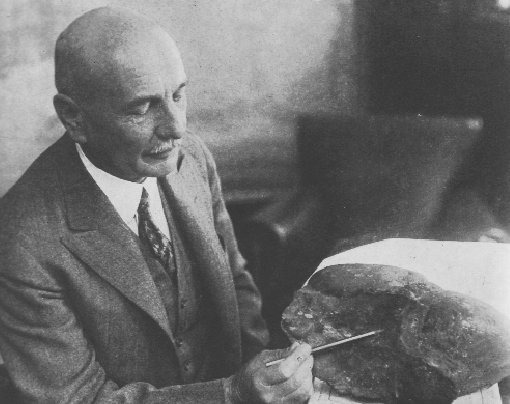

Dr Hans Merensky passed away on his Westfalia Estate on this day in 1952, after a lifetime of groundbreaking geological and philanthropic work.
Merensky was born on 16 March 1871 at Berlin Missionary Society station in Botshabelo, near Middelburg, where his father, Alexander Merensky, a noted ethnographer and author, was the resident missionary.
Keenly interested in minerals and enjoying outdoor living, he studied mining geology after finishing his schooling in Germany. In 1904, he took a year’s leave to visit South Africa to conduct some geological surveys in the Transvaal. He discovered tin near Pretoria and reported to the Premier Diamond Mine regarding possible mining prospects. He worked for several mining companies and Friedlaender & Co. sent him to Madagascar to investigate a reported discovery of gold, which turned out to be false. He resigned from his job in Germany and moved to Johannesburg, where he became a successful consulting geologist.
In 1913, Merensky went bankrupt as a result of the Depression, and during World War I, he was called up and stationed in a camp near Pietermaritzburg in KwaZulu-Natal. After the war, the mines began employing their own geologists on a permanent basis, reducing the need for consulting geologists, and Merensky’s business suffered as a result. With the occasional support of Sir George Albu, however, he overcame this challenge and in 1924 discovered large platinum deposits near Lydenburg.
In 1926, he visited Germany and was abroad when diamonds were discovered in Namaqualand. Applying knowledge from his previous studies on the association between diamonds and the presence of fossilised oyster shells, Merensky later visited the oyster beds at Alexander Bay on the West Coast of South Africa. His prospects led to the discovery of an enormous number of pure diamonds in the area, which was reserved, and Merensky received £1 250 000.
Anxious that his fortune should be put to constructive use so that others might also benefit from his windfall, Merensky donated money to universities, schools, libraries, hospitals, charities, cultural organisations and other people in need.
He was the leader in establishing agricultural schools in South Africa and made it possible for the University of Stellenbosch to create a Forestry faculty, which greatly boosted the large-scale forestry industry in South Africa. His funding also helped establish the Merensky High School in Tzaneen in 1936, one of South Africa’s most successful agricultural schools, not far from his farm, Westfalia Estate.
Merensky has had several landmarks, objects or institutions named after him, such as Merensky High School, Hans Merensky Wilderness, the Merensky Reef, Hans Merensky Library at the University of Pretoria, and even the Hans Merensky Golf Course.
Do you perhaps have more information pertaining to this story? Email us at northsider@caxton.co.za (remember to include your contact details) or phone us on 011 955 1130.
For free daily local news on the West Rand, also visit our sister newspaper websites


