
Today in History: The Great Fire of London starts burning
The fire engulfed and destroyed some 13 000 homes, left 100 000 London residents homeless, and destroyed four-fifths of London.
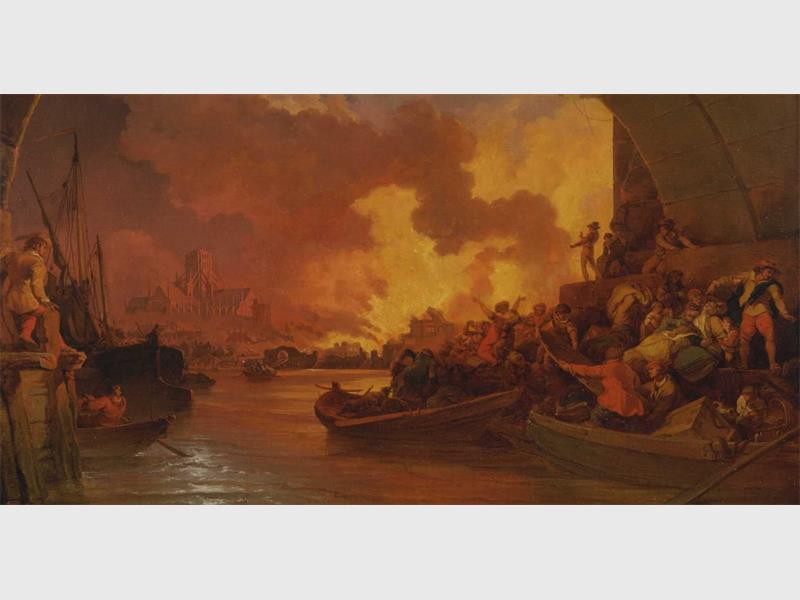

The Great Fire of London was a disaster waiting to happen. London in 1666 was a city of medieval houses made mostly of oak, and that disaster became a reality on 2 September.
Some of the poorer houses had walls covered with tar, which kept out the rain but made the structures more vulnerable to fire. Streets were narrow, houses were crowded together, and the firefighting methods of the day consisted of neighbourhood bucket brigades armed with buckets of water and primitive hand-pumps.
Citizens were instructed to check their homes for possible dangers, but there were many instances of carelessness.
So it was on the evening of 1 September 1666, when Thomas Farrinor, the king’s baker, failed to properly extinguish his oven. He went to bed, and some time near midnight on 2 September sparks from the smouldering embers ignited firewood lying beside the oven. Before long, his house was in flames. Farrinor managed to escape with his family and a servant out an upstairs window, but a bakery assistant died in the flames – the first victim.
It had been a hot, dry summer, and a strong wind further encouraged the flames. As the conflagration grew, city authorities struggled to tear down buildings and create a firebreak, but the flames repeatedly overtook them before they could complete their work.
People fled into the Thames River, dragging their possessions with them, and the homeless took refuge in the hills on the outskirts of London. On 5 September, the fire slackened, and on 6 September it was brought under control.
The Great Fire of London engulfed 13 000 houses, nearly 90 churches, and scores of public buildings. The old St Paul’s Cathedral was destroyed, as were many other historic landmarks. An estimated 100 000 people were left homeless.
Within days, King Charles II set about rebuilding his capital. The great architect, Sir Christopher Wren, designed a new St Paul’s Cathedral with dozens of smaller new churches ranged around it like satellites. To prevent future fires, most new houses were built of brick or stone and separated by thicker walls.
Do you perhaps have more information pertaining to this story? Email us at roodepoortrecord@caxton.co.za (remember to include your contact details) or phone us on 011 955 1130.
For free daily local news on the West Rand, also visit our sister newspaper websites
Remember to visit our Facebook, Twitter and Instagram pages to let your voice be heard!


