
Today in History: The Louvre Museum was opened to the public
The Louvre was only opened to the public after the French Revolution in 1789.
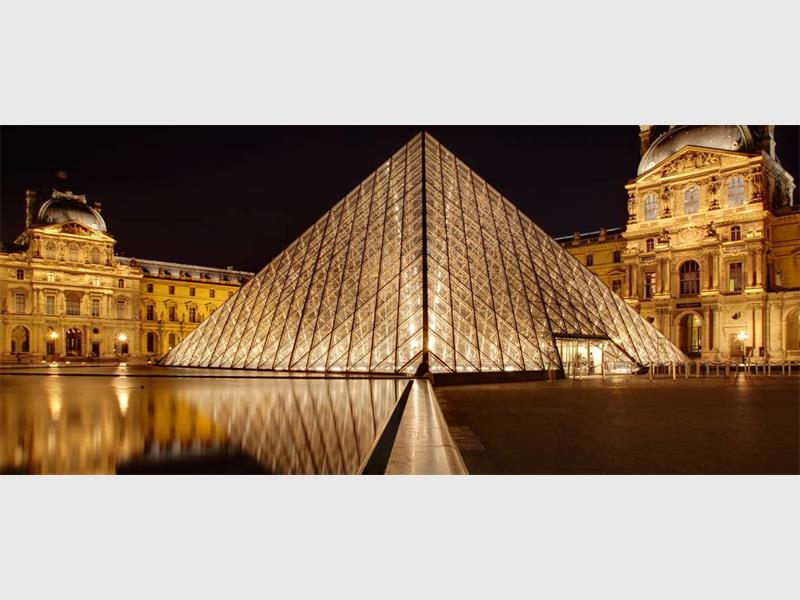

The Louvre had been the French royal palace for nearly two centuries before King Louis XIV moved to Versailles, leaving his art collection at the Louvre, which became a public museum in 1893.
The Louvre palace was begun by King Francis I in 1546, on the site of a 12th-century fortress built by King Philip II. Francis was a great art collector, and the Louvre was to serve as his royal residence.
The work, which was supervised by architect Pierre Lescot, continued after Francis’ death and into the reigns of kings Henry II and Charles IX. Just about every subsequent French monarch extended the Louvre and its grounds, and major additions were made by Louis XIII and Louis XIV in the 17th century.
Both of these kings also greatly expanded the crown’s art holdings, and Louis XIV acquired the art collection of Charles I of England after his execution in the English Civil War. In 1682, Louis XIV moved his court to Versailles, and the Louvre ceased to be the main royal residence.
In the spirit of the Enlightenment, many in France began calling for the public display of the royal collections. Denis Diderot, French writer and philosopher, was among the first to propose a national art museum for the public.
Although King Louis XV temporarily displayed a selection of paintings at the Luxembourg Palace in 1750, it was not until the outbreak of the French Revolution in 1789 that real progress was made in establishing a permanent museum.
Eventually, on 10 August 1793, the revolutionary government opened the Musée Central des Arts in the Grande Galerie of the Louvre.
The collection at the Louvre grew rapidly, as the French army seized art and archaeological items from territory and nations conquered in the Revolutionary and Napoleonic wars. Much of this plundered art was returned after Napoleon’s defeat in 1815, but the Louvre’s Egyptian antiquities collections and other departments owe much to Napoleon’s conquests.
Two new wings were added to the museum in the 19th century, and the multi-building Louvre complex was completed in 1857, during the reign of Napoleon III. With artwork and artefacts representative of 11 000 years of human civilisation and culture, the Louvre’s collection is one of the richest in the world.
Do you perhaps have more information pertaining to this story? Email us at roodepoortrecord@caxton.co.za (remember to include your contact details) or phone us on 011 955 1130.
For free daily local news on the West Rand, also visit our sister newspaper websites
Remember to visit our Facebook, Twitter and Instagram pages to let your voice be heard!


