
Today in History: Remembering South Africa’s first democratic elections by the numbers
1994 was a landmark year for South African people of colour as they were finally awarded the right to vote in free and fair elections for the first time in the country's history.
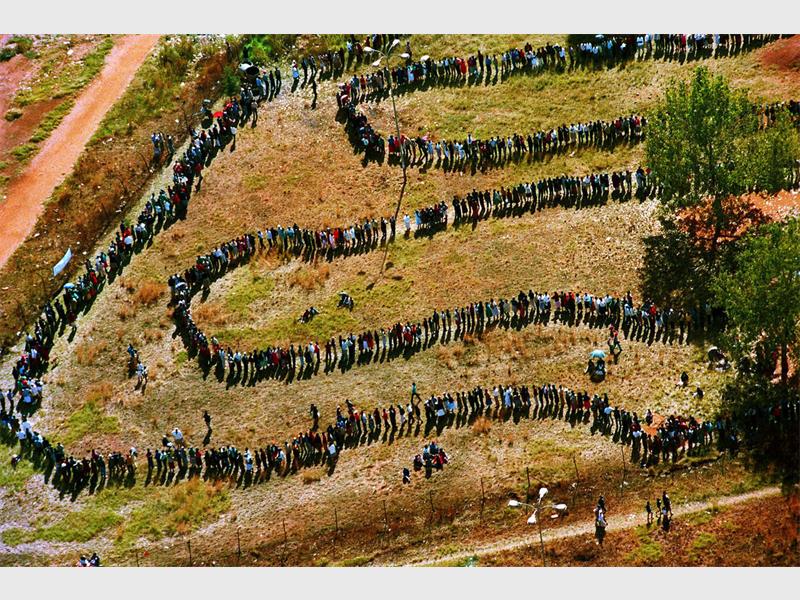

During the Apartheid era (and even prior to it) South African people of colour were denied the right to vote in the country’s elections in one of the ruling National Party’s (NP) many ways of oppressing the country’s majority.
South Africa’s first democratic elections in 1994 were the culmination of four years of expanded negotiations which had begun in 1990 with the unbanning of liberation movements, including the African National Congress (ANC), South African Communist Party (SACP) and the Pan Africanist Congress (PAC) and a commitment to a negotiated settlement by the then-ruling NP.
The four-year transition period, from February 1990 to April 1994, was characterised by political violence between the ANC and IFP, manifested as a low intensity war over the previous two decades.
Supporters of the two political parties waged war on each other in what were some of the bloodiest years during the struggle against Apartheid.
On 2 February 1994, State President FW de Klerk announced that elections were to be held shortly.
Heading into the elections, the three leading parties were by far the Nelson Mandela-led ANC, the De Klerk-led NP, and the Mangosuthu Buthelezi-led IFP, with many political pundits backing the ANC to sweep up most of the votes at the elections.
The elections were observed by a 60-member Commonwealth Observer Group (COG) under the leadership of a former Prime Minister of Jamaica, Michael Manley.
Approximately 22,6 million South Africans registered to vote in the elections, less than half of the country’s population at the time.
While elections began on 27 April, the previous day had marked the first time in history that the new South African flag was flown.
When election day rolled around, a resounding 19,7 million (86,9 per cent) of the registered voters pitched up to change the history of South Africa.
As was expected, the ANC won the election by a country mile, taking home 12 237 655 (62,65 per cent) of the votes.
The NP managed to come in second, albeit with only 3 983 690 (20,39 per cent) votes – a dismal outcome when compared to the ANC’s results.
The IFP was, as expected, the third most-voted for party with 2 058 294 (10,54 per cent) of the country’s votes.
Of the 19,7 million votes cast, 193 112 were spoilt, resulting in a total of 19 533 498 successfully cast votes.
A total of 19 parties appeared on the ballot papers for this election, but only seven gained seats in the National Assembly and only five gained positions in the Senate, which was renamed as the National Council of Provinces in 1997.
The ANC garnered 252 of the 400 seats in the National Assembly, plus 60 of the 90 positions in the Senate.
Do you perhaps have more information pertaining to this story? Email us at roodepoortrecord@caxton.co.za (remember to include your contact details) or phone us on 011 955 1130.
For free daily local news on the West Rand, also visit our sister newspaper websites
Remember to visit our Facebook, Twitter and Instagram pages to let your voice be heard!


