
Today in History: Jan van Riebeeck landed at the Cape of Good Hope in 1652
One of the defining moments in South African history – Jan van Riebeeck landed at the Cape of Good Hope on behalf of the Dutch East India Company 366 years ago.
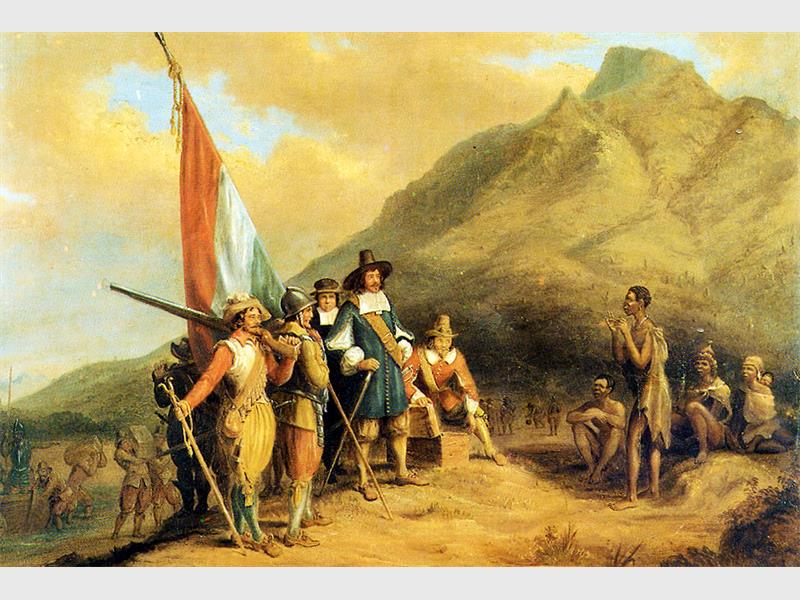

On 24 December 1651, accompanied by his wife and son, Jan van Riebeeck set off from Texel, Netherlands for the Cape of Good Hope.
Van Riebeeck had signed a contract with the Vereenigde Oost-Indische Compagnie (Dutch East India Company) (VOC) to oversee the setting up of a refreshment station to supply Dutch ships on their way to the East.
Sailing on the Dromedaris, with two other ships, the Rejiger and De Goede Hoop close behind, Van Riebeeck was accompanied by 82 men and 8 women.

The journey would take a little over four months, with Van Riebeeck and company spotting land on 5 April, and making landfall on 6 April, 1652.
Van Riebeeck was under strict instructions not to colonise the region. Instead he was to build a fort and erect a flagpole for signalling to ships and boats to escort them into the bay. The aim was to simply establish a refreshment station to supply the crews of the VOC’s passing trading ships with fresh water, vegetables and fruit, meat, and medical assistance.
However, due to a war that erupted between the Dutch and the British, construction of the fort became urgent and it was completed with four corners made of mud, clay and timber – in the middle of what is today Adderley Street.
The first winter that Van Riebeeck and company endured in the Cape was a rough one, with both their food stocks and their numbers dwindling – about 19 men died.

Permits were issued in February 1657 to free nine VOC servants (who became the Free Burghers) to farm along the Liesbeeck River in order to deal with a wheat shortage.
In response to the growing number of skirmishes with the local population, Van Riebeeck planted a wild almond hedge in 1660 to protect his settlement. A few of these almond trees still survive in the Kirstenbosch National Botanical Gardens.
Van Riebeeck left the Cape in May 1652, with the damage already having been done, leaving behind 134 officials, 35 Free Burghers, 15 women, 22 children and 180 slaves.
The Castle of Good Hope would be built between 1666 and 1679, and replaced the original Fort de Goede Hoop (Fort of Good Hope).
And the rest, as they say, is history…
Do you perhaps have more information pertaining to this story? Email us at roodepoortrecord@caxton.co.za (remember to include your contact details) or phone us on 011 955 1130.
For free daily local news on the West Rand, also visit our sister newspaper websites
Remember to visit our Facebook, Twitter and Instagram pages to let your voice be heard!


