
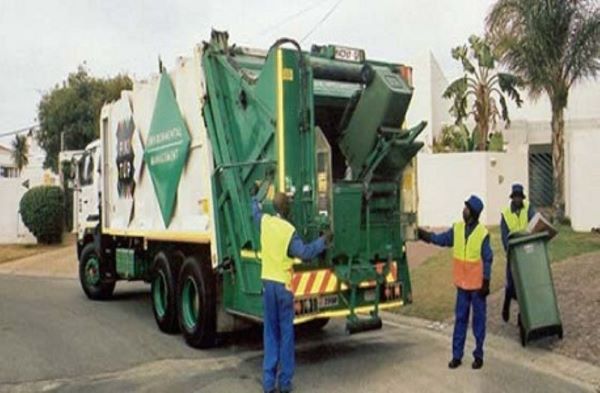
WATCH:Pikitup refuse removal.
Waste management is a vital component of environment management which seeks to safeguard human life and sustain the environment. It is for this reason that waste management service providers have been categorised under essential services under the current lockdown because these services reduce and eliminate adverse impacts of waste materials on human health and the environment and also support economic development and quality of life.
One business entity in the waste management sector which has continued to serve the public during the lockdown is Pikitup. Pikitup manages waste for the City of Johannesburg and is mandated to provide integrated waste management services to the residents of Johannesburg.
What integrated services does Pikitup provide?
- Pikitup services the entire 1 625 square kms that is Johannesburg, collecting around 6000 tons of waste every day.
- The business employs more than 4500 people, using more than 200 trucks to collect refuse for the City of Joburg’s private and business residents.
- Pikitup cleans and sweeps approximately 9 000 kilometres of streets across the seven regions.
- Pikitup has 12 waste management depots strategically located throughout the City, 44 garden refuse sites, and four active landfill sites which it continues to manage and service during the lockdown.
In order to deal with the health risk paused by the Coronavirus to the communities and Pikitup employees, this reputable service provider has put in place measures aimed at the community and its employees.
Pikitup measures during Lockdown
- Mass screening of workers at various depots
- Depots are cleaned and sanitised on a daily basis
- Extra gloves and face masks procured and provided to employees
- Pikitup trucks are cleaned and sanitised before they head out to service their areas
- Employees are shown their expected daily safety procedure by health and safety officers
- Employees are being provided with personal hand sanitisers
- Awareness campaigns and appeals are being rolled out so that residents sanitise their bins
Speaking at the screening exercise at Southdale depot in Johannesburg, Mpho Moerane- MMC, environmental and infrastructure highlighted what is being done to safeguard employee safety and wellness.
“Today is the launch, we started at Southdale depot, we have about 260 employees that we are screening, those we identify with symptoms we send them for testing. Pikitup employees are the most vulnerable because they are on the streets and they are more exposed, so it’s our responsibility to make sure they are healthy. We currently don’t have enough screening tools but we are getting them soon. We also plan to roll it out to other entities like city power and Johannesburg water”, said Mpho.
His sentiments were echoed by Selinah Tshabalala, Regional Manager, Pikitup.
“At the moment we have a challenge with masks and gloves because most companies are not operating so we are relying on orders made centrally, but everything is being done to protect the lives of Pikitup employees”, emphasised Selinah.
One of the workers interviewed during the screening program, Lenhololo Makena, expressed delight and concerns.
“I’m very much concerned because this job that we are doing, we face many challenges, the chances of us contracting diseases is very high”, said Lenhololo.
While efforts are being made with regards to Pikitup employees, one of the major contributors in this industry has been dealing with a different side of the coin during the current lockdown.
The North Gauteng High Court dismissed an urgent application by Lawyers for Human Rights (LHR) on behalf of reclaimers and waste-pickers demanding recognition as essential service workers.
Between 60,000 and 90,000 waste-pickers are responsible for collecting 80 to 90% of used packaging and paper that is recycled in South Africa, according to a study by the Council for Scientific and Industrial Research (CSIR).
The Department of Environment, Forestry and Fisheries said since the collection of recyclable waste was not included as an essential service during the lockdown, waste pickers have been unable to earn a living
The department announced that after several meetings with the packaging industry, it has secured R785 000 which will be used to help waste pickers and reclaimers who have lost their livelihoods. Twelve companies in the packaging industry also made donations.
About 3 925 waste pickers who make a living by recycling materials such as paper, plastics and bottles in different cities around the country will receive vouchers which they can reclaim at specified retailers. The department had already paid 1 000 of these vouchers to waste reclaimers by Thursday, 9 April.
Minister of Forestry, Fisheries and Environmental Affairs, Barbara Creecy said the electronic vouchers will be distributed to waste pickers’ cell phones. Organisations representing re-cyclers have submitted lists of beneficiaries who will receive the vouchers.
The department said with the help of Coca-Cola Beverages SA and Fibre Circle, it also distributed food parcels to waste pickers in Gauteng and handed out food vouchers to the waste reclaimers in Sasolburg.
The measures and steps taken above should go a long way in safeguarding the interests of this key industry.


