
Mogale City response to Kromdraai Portion 26 water challenges
Attesting to their findings, Amod noted that apart from Portion 26, the same water is also supplied to other informal settlements and no complaints or reported illnesses stemming from consumption of the water have been received.
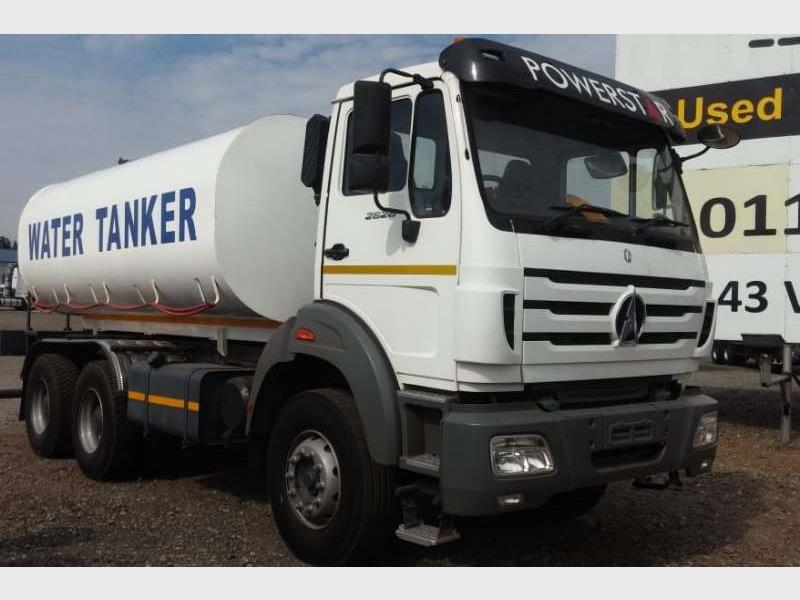
Following critical concerns about the supply of contaminated water and inadequate supply of water in Kromdraai Portion 26, Mogale City Local Municipality came out to set the record on the issues.
Mogale City Corporate Communications officer Adrian Amod, who said the municipality was aware of the concerns, gave a detailed response regarding the complaints and subsequent interventions.
Read more:
https://roodepoortnorthsider.co.za/324134/clinic-in-kromdraai-at-risk-of-shutting-down/
“Firstly, our Utilities Management Services section is aware of concerns raised by Kromdraai Portion 26 residents and upon receiving this complaint from the said community via Councillor Macguire, the following steps were taken: An investigation that included a physical visit to the site commenced on 18 March 2020; A Water Quality Monitoring was conducted on the same date, from the below areas – the water tanker supplying water to the community; the Jojo tank providing water to the community and the Jojo tank at the Kromdraai Clinic,” Amod explained.
He added that the results indicated that the microbiological water quality of the samples tested was of no concern and all bacteria results were within drinking water quality guidelines.
The municipality also clarified the issue of polluted drinking water. Amod explained, “It was found that the Jojo tank at the clinic belonging to the Department of Health had a build-up of mud that settled at the bottom and had not been cleaned for an extended period.”
“It was also established that when our water tanker truck pipe pours water into the tank, the settled mud gets agitated and mixes with the clean water thus makes the water dirty and turbid”.
Attesting to their findings, Amod noted that apart from Portion 26, the same water is also supplied to other informal settlements and no complaints or reported illnesses stemming from consumption of the water have been received.
Based on the above findings, he said Utilities Management Services has made recommendations to the Department of Health to action the following: That the Jojo tank be cleaned with high-pressure water to get all the sludge at the bottom of the tank out on a six monthly to annual basis and that a floating chlorine holder with chlorine tablets be used for the continuous disinfection and killing of bacteria.
“While Utilities Management Services awaits the Department of Health to clean the Jojo tank, the following actions had to be taken to protect the health of residents: Use of the Jojo tank will be discontinued until it is properly cleaned and disinfected; Once Utilities Management Services receives confirmation that the tank is clean, it will be filled with clean water. However, that water may not be used until the water quality is tested again. This may take three days,” he explained.
He added that presently water is distributed in small tanks and water tanks owned by residents. “Community members were advised to sanitize their water tanks to avoid cases where they could suffer infections and viruses. At this stage, this is a safer and temporary solution whilst a better on longer term solution such as the bigger Department of Health’s tanker is cleaned and other explored options,” Amod detailed.
He also implied that the residents had brought the water challenge on themselves. “There was water supply to Portion 26 via a borehole a few months ago but some residents bypassed the transformer in order to connect electricity to their homes, which in turn led to overload on the transformer which burn out. After repairing a burnt transformer four times in a month, Eskom has refused to repair it as it’s not sustainable and a loss in terms of resources allocated to do constant repairs. Use of the borehole as a water source pumped by means of the referred to transformer is therefore also not an option due to the illegal electric connections,” Amod described the challenge.
Apart from this challenge, he also indicated that they’ve been blocked to provide proper water for Portion 26. “Portion 26 cannot be supplied with water through a proper water infrastructure or piping system as there is an objection firstly from Gauteng Provincial Government’s Department of Economic Development which manages the Cradle of Humankind World Heritage Site (Management Authority). Secondly, there’s also objection from neighbouring landowners who along with the Cradle of Humankind Management Authority are opposing a permanent housing (township) development in a World Heritage Site that has regulations and restrictions on dense residential developments,” he concluded.


