
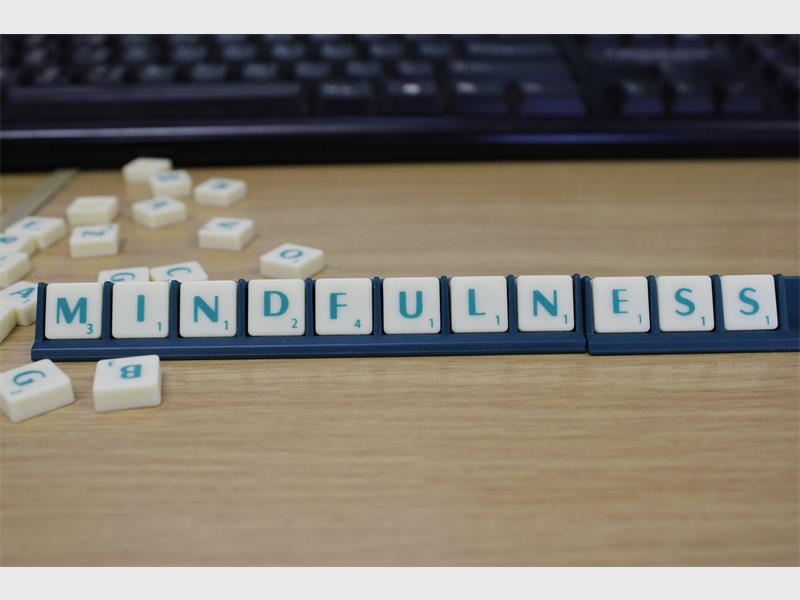
The Oxford English Dictionary defines mindfulness as a mental state achieved by focusing one’s awareness on the present moment, while calmly acknowledging and accepting one’s feelings, thoughts, and bodily sensations.
It is a therapeutic technique used to relieve stress, ease anxiety, and open up people’s minds to the more positive aspects of life.
Buddha said, “Do not dwell in the past, do not dream of the future, concentrate the mind on the present moment.”
We shouldn’t dwell on the past because there is no way to change it. If we come to accept it we can teach ourselves to move on and learn from our mistakes. While we should have hope for the future and our goals, we must not overthink what could happen. Focusing on what is happening now is one of the main aspects of mindfulness. If we look at what we are doing and what is happening around us at the present moment then we have more possibilities of doing better. If we don’t like what we are doing or what is happening, we can change it and if we do, then we don’t need to stress about what could be.
There is a silver lining to every dark cloud. If we focus on what is happening now and make an effort to see the good in people and situations we will be happier and more accepting people.
Thich Nhat Hanh said, “The present moment is filled with joy and happiness. If you are attentive, you will see it.”
Mother Teresa was a very big advocate for mindfulness. She is known as the Saint of Calcutta in the Roman Catholic Church. Her missionary work and wisdom became a source of inspiration for numerous people. She spoke about mindfulness by saying, “Be happy in the moment, that’s enough. Each moment is all we need, not more.”
If we always focus on what we don’t have then we lose the chance at true happiness. Being grateful for what we have will make us happier because what we have is enough. Yes, we all want more and work towards it, but what we have now is a gift.


