
Today in history: Britain and Egypt agree on Suez Canal
Despite the existence of an Egyptian government Britain was determined to maintain its control over the Suez Canal, and its mounting resistance to British presence.
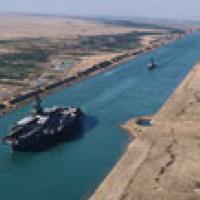
In 1869, when the Suez Canal was opened, it was the easiest link to the Mediterranean Sea and the Indian Ocean, and was of great strategic importance.
Situated in Egypt and largely owned by the Egyptian ruler at the time, shares in the canal operating company were sold to the British government in 1875.
The British invasion of Egypt in 1882 brought the canal and the country of Egypt under full British control, which was maintained by a lease throughout the Second World War.
Despite the existence of an Egyptian government, Britain was determined to maintain its control over the Suez Canal, and its mounting resistance to British presence.
In 1951, the Egyptian government withdrew the 20-year lease stipulated in the Anglo-Egyptian Treaty of 1936.
Britain refused to withdraw from the canal, resulting in anti-British protests in which both British and Egyptian citizens were killed.
Britain was eager to prevent the further deterioration of relations with Egypt, particularly under its new leadership, and agreed to the Suez Canal Agreement.
This was signed on 19 October 1954, and involved the withdrawal of Britain’s troops from the region, in exchange for the maintenance of the canal as a British base.
Currently, close to 20 000 ships pass through the canal every year.
Information sourced from: South African History Online.


