
Horse behaviour explored in Part 2 of the workshop
Natalie also explained that in the two workshops presented, delegates also explored non-verbal communication, i.e., exactly how a person interacts with a horse using body language, mind and tools.
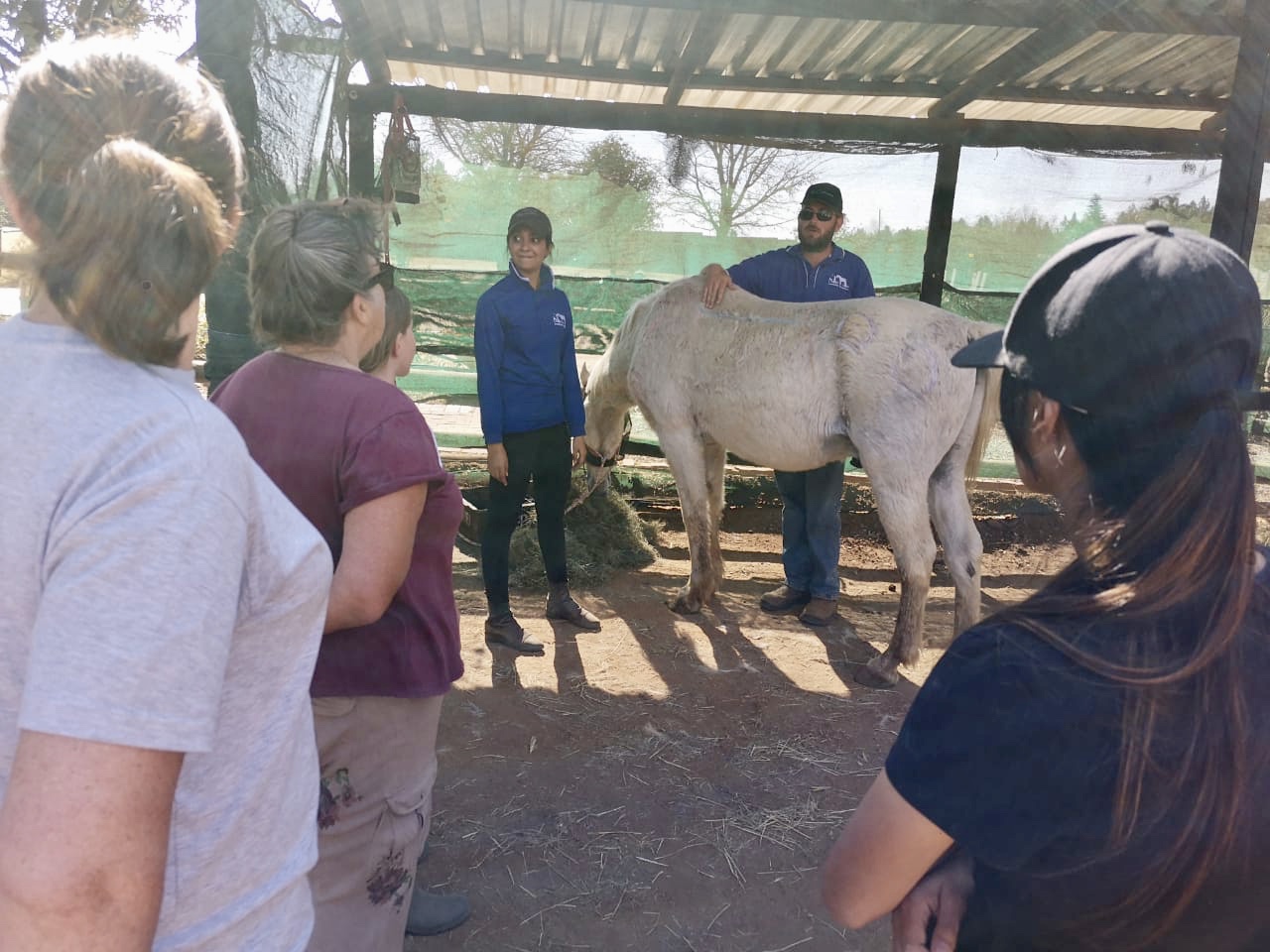
The EARTH Centre’s horsemanship workshop journey continued on Sunday, 25 August, when the pre-booked attendees enjoyed working with the horses.
The centre’s operation manager, Natalie Stobäus, touched on the importance of the programme. “Learning horsemanship skills involves a lot of self-mastery – mastering your thoughts, your communication of your intent, your rope- or rein-handling skills and your body language, to set your horse up for success with the tasks you are asking of him,” she explained.
She also explained that in the two workshops presented, delegates also explored non-verbal communication, i.e., exactly how a person interacts with a horse using body language, mind and tools.
The theory was made practical when the delegates learned several basic ground controls, a lesson that highlighted the specific movements of a horse.
The highlight of the second workshop was that the attendees were introduced to some basic anatomy, in very practical terms. “The idea behind the basic anatomy piece was to give some insight into what actually goes on for a horse when the human asks him to perform certain moves. This in turn will enable the human to become a better teacher and partner for the horse, because their requests and clarity of communication will become more suited to the horse’s current ability to perform the required task – and so the horse finds a partner he can begin to trust in the human,” Natalie explained.


