
Today in History: USA drops an atomic bomb on Nagasaki
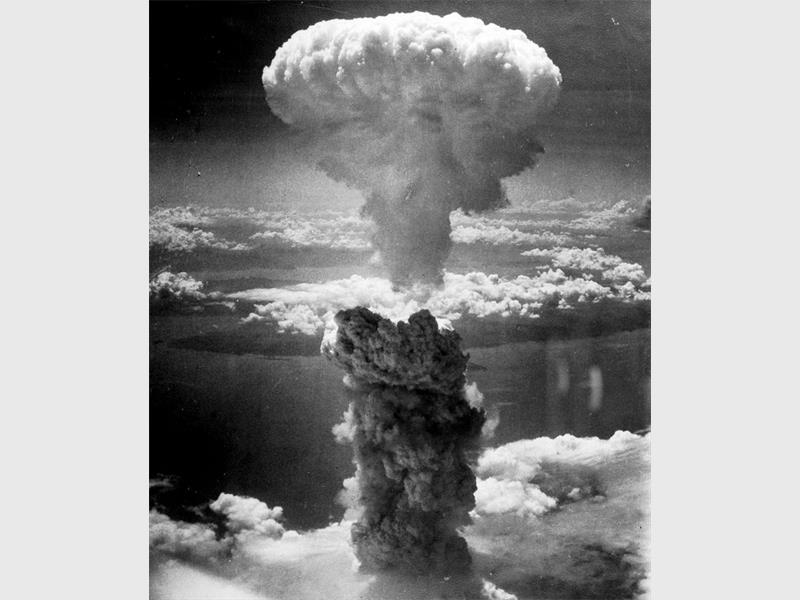
On 9 August 1945, the 'Fat Man' nuclear bomb was detonated over Nagasaki. Six days later, the Japanese surrendered, bringing an end to World War II.
World War II broke out with the German invasion of Poland in 1939. By 1941, the Japanese had launched a military strike on the United States by attacking their naval base at Pearl Harbour, Hawaii.
The Americans then entered the war and proceeded to bomb 67 cities across Japan. An ultimatum was then issued to the Japanese – surrender or face mass destruction.
The Japanese ignored the ultimatum and the USA dropped an atomic bomb on the Japanese city of Hiroshima.
On 9 August 1945, the ‘Fat Man’ nuclear bomb was detonated over Nagasaki. Six days later, the Japanese surrendered, bringing an end to World War II.
The bombing and its after-effects killed 80 000 people in Nagasaki. The majority of casualties were civilians, and many of the survivors were exposed to the radiation released by the bombs.
In 1968, the Nuclear Non-Proliferation Treaty (NNPT) was opened for signature. To date, 189 countries have signed this treaty, in which the use of nuclear weapons is restricted.
This treaty was created in the hope that a nuclear attack similar to Nagasaki can be prevented from occurring in the future.
South Africa signed this treaty on 10 July 1991, and was subjected to a safeguard check by the International Atomic Energy Agency (IAEA) a month later.
Information sourced from: South African History Online.


