
How parents can help learners to pass their exams
Most children have a shorter memory span, and breaking the timetable into half-hour chunks makes it easier to set up.
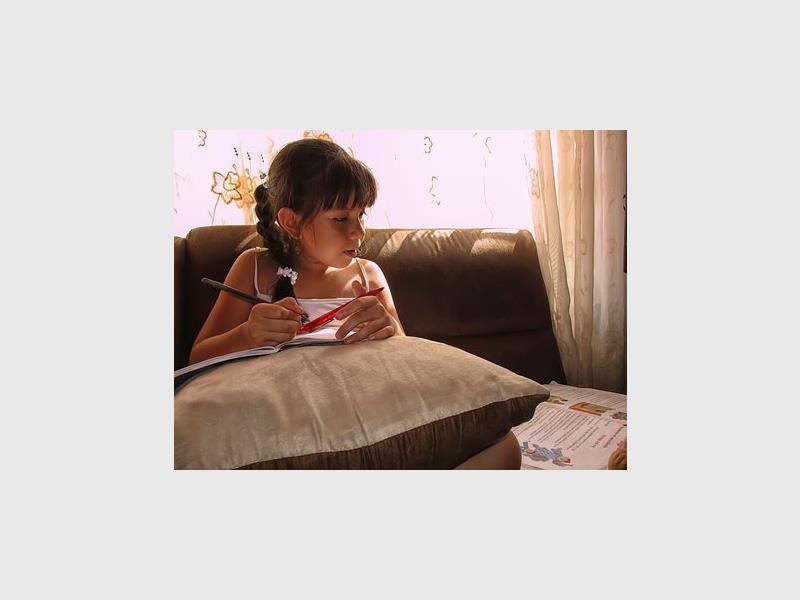
Examination time can be one of the most stressful times in your child’s life, with both child and parent as nervous as can be. As a parent, you would want to help your child through this tough time, but sometimes you might not be sure how.
Here are some tips for parents who want to help their children study during exams.
Set the scene
Routine is very important, as it encourages discipline and will help prepare your child for later grades, when more time will have to be put into studying.
Work with your child to decide on a time and place best suited to studying. The area should remind your child of studying and should not have pictures or posters that can be a distraction.
The study area should have a desk that’s big enough for study materials such as pencils, books, dictionaries and reference material.
The lighting should provide adequate visibility, but must not be too bright or dim.
Most children prefer to study with some background noise, so they don’t feel abandoned. Soft classical music works well, especially for an auditory learner, but avoid music with vocals, which may cause your child to concentrate on the lyrics, rather than studying.
Make learning fun – help your child develop essential study skills with these fun and creative activities
When travelling, give your child a map and make it his responsibility to direct you.
Try to relate what your child is studying to something she’s familiar with. For example, if she’s studying flowering plants, use the plants in your garden to encourage a different view from what’s in the textbook.
Time management
Studying shouldn’t be done only at exam time. It should be practised throughout the year. Revision is crucial and should be done every day. Studying for the exams should therefore only be a case of revising information the child is already familiar with. Before setting up a timetable, ask your child how he feels when he gets home after school. Some children prefer to take a break, while others are in the ‘school mode’ and prefer to revise immediately. It’s crucial that your children contribute to setting up a timetable. It makes them assume ownership. If they don’t, they’ll feel as if it’s being forced on them. Although some research suggests study periods of 40 minutes, 25 minutes of studying followed by a five-minute break is better.
Most children have a shorter memory span, and breaking the timetable into half-hour chunks makes it easier to set up. Here’s how to go about it:
Make a list of extramural activities such as hockey, tennis, and so on, on a sheet of paper.
Mark off time for homework, dinner, relaxing, and so on.
Insert the due dates of assignments and projects, adding the time needed to work on them.
Lastly, fill in study periods and breaks.
Mind-mapping
Studying large chunks of information can be daunting. To digest it more easily, encourage your child to break the work into bite-sized pieces.
Get your child to write a central word or concept on a piece of paper.
Around that word, write down five to 10 main ideas that relate to that word. Now take each of those words and again write down five to 10 main ideas that relate to each word.
In this way a large number of related ideas can be put together. This method encourages summary writing and is a useful tool for creative writing, where it’s important to get all your ideas down first. It also makes revision easier and faster, and is especially useful for visual learners.
Learn more about mind-mapping
Mnemonics
This method is based on remembering the first letter of a keyword in a sequence and can be used to help remember information, such as facts or long lists of places or names. If your child needs to remember the names of the planets and their order, put together a sentence or phrase using a new word starting with the first letter of each of the keywords. For example, “My Very Early Mother Just Saw Us Near Paris” represents the names of the planets in our solar system, and their order in relation to the sun: Mercury, Venus, Earth, Mars, Jupiter, Saturn, Uranus, Neptune and Pluto.
The two-minute brain booster
To study effectively, we need to use both sides of the brain. Get your child to try this two-minute exercise to activate the creative part of the brain which is needed for successful studying:
Get your children to write down as many uses for a paper clip as they can. They don’t have to be logical. For example: it keeps pages together; can be used as a toothpick; can be used as a teaspoon, and so on. Develop your own exercises, for example, uses for a rubber band, a brick, and so on.
Source: https://www.parent24.com.


