
Today in History: The Great Comet of 1901 is spotted in Cape Town
The comet was readily visible to the naked eye until about May 20 and visible by telescope until October.
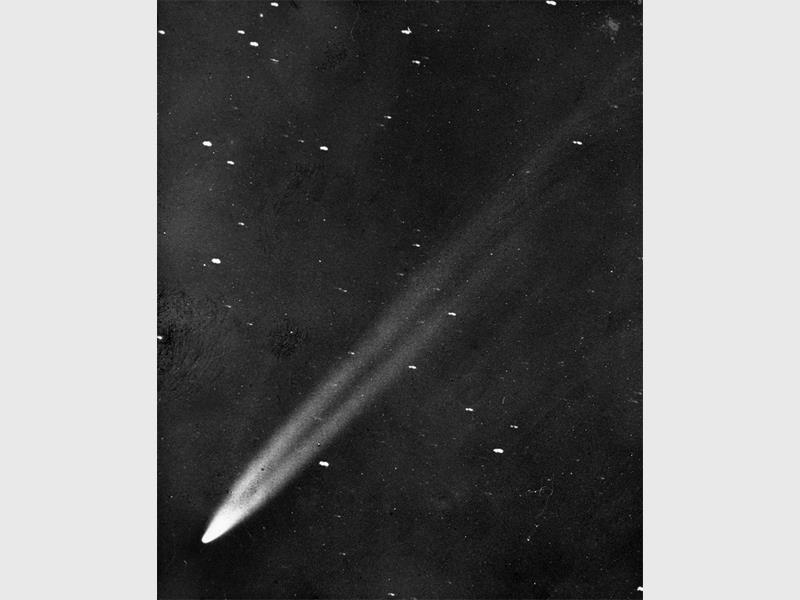
On this day in 1901, a comet that became known as ‘The Great Comet of 1901’ or ‘Comet Viscara’ was visible to the naked eye over most of South Africa.
In the pre-dawn of 12 April, 1901 there was a naked-eye discovery of the comet by Viscara, the manager of an estancia (large private plot) in the Departamento de Paysandú, Uruguay. In the pre-dawn of 23 April, the comet was first observed in Queenstown, South Africa and on 24 April by David Gill and Robert Innes at the Royal Observatory in Cape of Good Hope; the tail was then about 10° long.
On 24 April, the comet was also observed at Cape Leeuwin in Western Australia. At the Sydney Observatory on 25 April, HC Russell found the tail to be about 2° long.
When the comet’s brightness reached its maximum on 5 May, the tail had fanned out to a weak plasma tail about 45° long and a curved dust tail about 15° long. On 5 May the comet’s brightness reached magnitude 1 or perhaps brighter. According to some observers (of the nucleus viewed telescopically following sunrise) the brightness might have reached magnitude 1,5.
Information courtesy of: https://en.wikipedia.org/wiki/Great_Comet_of_1901#/media/File:Great_comet_of_1901.jpg.


