
Remembering the first video game ‘Easter egg’
Robinett kept the Gray Dot and the hidden room a secret for more than a year, and did not mention it to anyone at Atari prior to his departure.
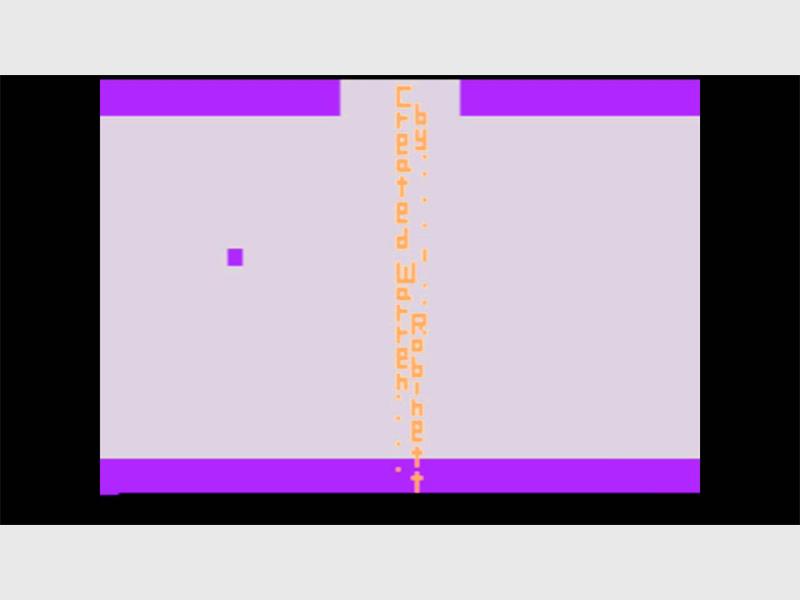
The very first recognised ‘Easter egg’ in a video game occurred in Atari’s 1979–80 release, Adventure, and was put there by developer Warren Robinett, without Atari’s knowledge.
For those who aren’t sure exactly what an Easter egg is when it comes to video games and media, “an Easter egg is an intentional inside joke, hidden message or image, or secret feature of a work” as defined by Wikipedia. While many an Easter egg can be found in video games and media nowadays, when Warren Robinett inserted his name as an Easter egg in Adventure, the phenomenon was unheard of.
At the time, Atari removed the names of game developers from their products, as they believed it was a way for them to prevent competitors from identifying and luring away their programmers. However, in defiance, Robinett – as a means to leave his name in his game – included a hidden message in Adventure, identifying himself as the creator, inspired by the supposedly hidden messages left on various songs recorded by The Beatles.
Within Adventure, the Easter egg is accessed by first retrieving the ‘Gray Dot’ from the black castle catacombs in difficulty levels 2 or 3. The player must bring the dot, along with two or more other objects to the east end of the corridor below the yellow castle. This causes the barrier on the right side of the screen to blink rapidly, and the player avatar is then able to push through the wall into a new room displaying the words “Created by Warren Robinett” in text which continuously changes colour.
After the game was released, Adam Clayton, a fifteen-year-old from Salt Lake City, discovered the Dot and sent a letter to Atari explaining how to retrieve it. Robinett had left the company by this time, so Atari tasked designers with finding the responsible code.
Atari eventually decided to leave the Dot in-game, and dubbed such hidden features ‘Easter eggs’, saying they would be adding more such secrets to later games. Steve Wright, director of software development at Atari, made it an official company policy that all future games should include Easter eggs, often limited to being the initials of the game developer.
Information courtesy of: https://en.wikipedia.org/wiki/Adventure_(Atari_2600)#Easter_egg.


