
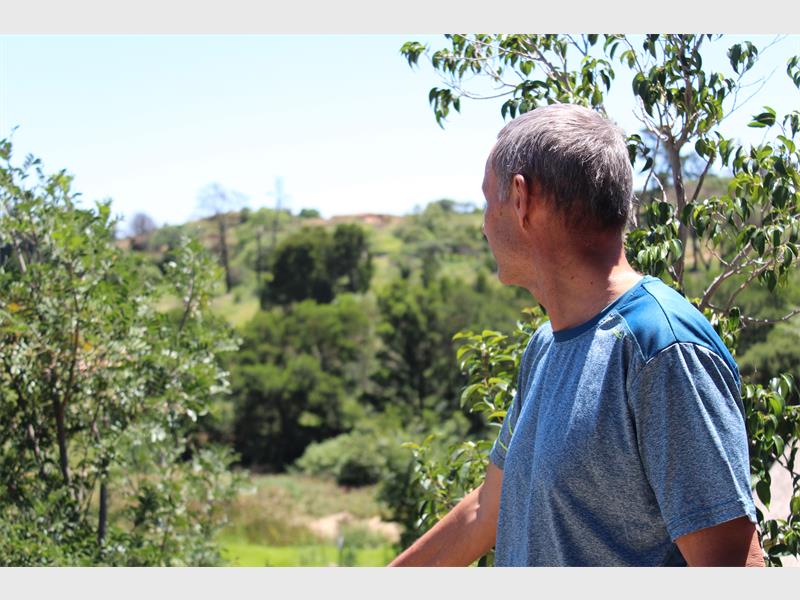
Residents in a section of Radiokop have, for years, been fighting landowners who have planned to develop on land that is protected due to the nature and geography of the property.
The first instance of a planned development came in 2008, when the landowner and developer came onto the property and began clearing trees without authorisation. This development was however swiftly dealt with and was stopped following action from Allan Eccles, a resident in a complex adjacent to the property.
Also Read:
https://roodepoortnorthsider.co.za/180779/sewage-gives-residents-the-run-around/
The second planned development, and the one which is still causing dismay among the residents, began with the granting of an exemption from environmental authorisation (EA) for development on the property in January 2009. The exemption from an EA meant the landowner had five years to begin development on his property, but still had to put together and submit an environmental management plan (EMP).
The EA exemption was bit surprising to Allan and the other residents, considering the fact that the property on which the development was proposed is one of the few areas in Gauteng that still contains a delineated wetland, a Class 2 granite ridge, and the presence of the threatened and rare Egoli Granite Grassland. “We got our own environmental specialist out to conduct an analysis of the property, and he stated that the property needs to be protected and looked after immediately, without development,” Allan said.
The exemption from an EA finally lapsed in 2014, without an EMP being submitted and without any development happening, meaning that the landowner couldn’t develop anymore. Or so Allan and co. thought. According to Allan, the Gauteng Department for Agricultural and Rural Development (GDARD) believes that the landowner erected a fence, which indicates the commencement of a development.
They were surprised by this however, as it is clearly visible upon visiting the site that there’s no fence erected. “Even if he did build a fence, that too would’ve been illegal as he never submitted an EMP in the five-year period,” Allan said. However, despite numerous appeals aided by mountains of evidence proving the lack of a fence, Allan and co.’s most recent appeal was rejected by GDARD late last year.
This now means that the landowner and his developer can commence with development, despite Allan believing that the development would be unlawful. “If they can prove, without any doubt, that a fence was built in the five-year period and an EMP was submitted, then we will back off because then it’s legal,” Allan said. “But, neither of those were done, and we won’t simply back down.’


