
Today in History: Freak, 12-day long storm finally dissipates over England
Hundreds of Royal Navy ships were lost to the storm, the worst in Britain’s history.
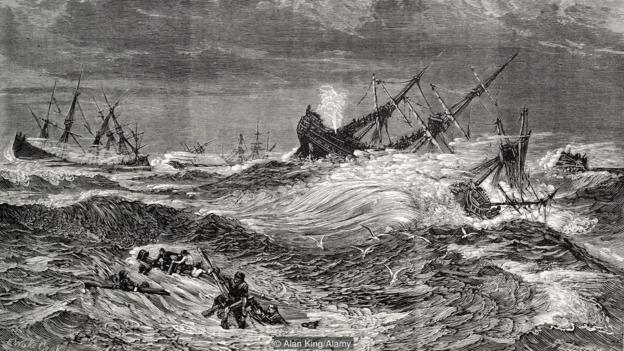
On this day in 1703, an unusual storm system finally dissipated over England after wreaking havoc on the country for nearly two weeks. Featuring hurricane strength winds, the storm killed somewhere between 10 000 and 30 000 people.
The unusual weather began on 14 November as strong winds from the Atlantic Ocean battered the south of Britain and Wales. Many homes and other buildings were damaged by the pounding winds, but the hurricane-like storm only began doing serious damage on 26 November.
With winds estimated at over 128km/h, bricks were blown from some buildings and embedded in others. Wood beams, separated from buildings, flew through the air and killed hundreds across the south of the country. Towns such as Plymouth, Hull, Cowes, Portsmouth and Bristol were devastated.
However, the death toll really mounted when 300 Royal Navy ships anchored off the country’s southern coast — with 8 000 sailors on board — were lost. The Eddystone Lighthouse, built on a rock outcropping 22,5km from Plymouth, was felled by the storm.
All of its residents, including its designer, Henry Winstanley, were killed. Huge waves on the Thames River sent water close to 2 metres higher than ever before recorded near London. More than 5 000 homes along the river were destroyed.
Author Daniel Defoe, who would later enjoy worldwide acclaim for his novel Robinson Crusoe, witnessed the storm, which he described as an “Army of Terror in its furious March”. His first book, The Storm, was published the following year.
Do you perhaps have more information pertaining to this story? Email us at northsider@caxton.co.za (remember to include your contact details) or phone us on 011 955 1130.
For free daily local news on the West Rand, also visit our sister newspaper websites


