
Today in History: The last quagga dies in an Amsterdam zoo
For the last 30 years or so, the Quagga Project has been attempting to bring the quagga back to life through selective breeding
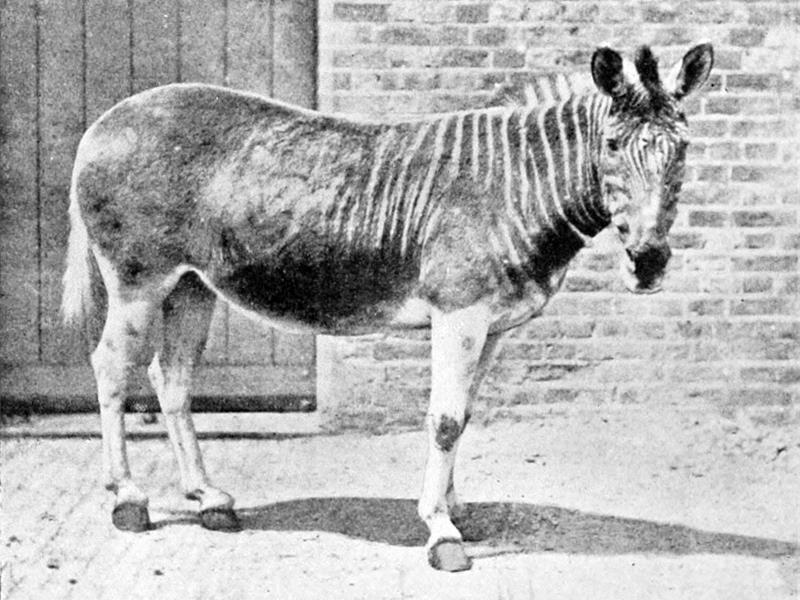
Despite having become extinct in the wild five years earlier, the last quagga in the world reportedly died in a zoo in Amsterdam, in the Netherlands, an astonishing 135 years ago.
The quagga is believed to have been about 257cm long and to have stood between 125 and 135cm tall at the shoulder. It was distinguished from other zebras by its limited pattern of primarily brown and white stripes, mainly on the front part of the body. The rear was brown and without stripes, and therefore more horse-like. The distribution of stripes varied considerably between individuals.
Little is known about the quagga’s behaviour, but it may have gathered into herds of 30–50 individuals. Quaggas were said to be wild and lively, yet were also considered more docile than the common Burchell’s zebra.
After the Dutch settlement of South Africa began, the quagga was heavily hunted as it competed with domesticated animals for forage. While some individuals were taken to zoos in Europe, breeding programmes were unsuccessful.
The last wild population lived in the then Orange Free State, and was extinct in the wild by 1878. Only one quagga was ever photographed alive and only 23 skins are preserved today.
In 1984, the quagga was the first extinct animal to have its DNA analysed, and the Quagga Project is trying to recreate the phenotype of hair coat pattern and related characteristics by selectively breeding Burchell’s zebras.
The Project’s first foal was born on 9 December 1988. On 20 January 2005, Henry (a foal considered to be the first quagga-like individual because of a visibly reduced striping) was born. The first 5th generation foal was born in December 2013.
Those individuals with the most reduced stripe patterns are called ‘Rau quagga’ by the members of the project.
In March 2016, the Quagga Project listed 116 animals in 10 locations, some of which are close to Cape Town. Of the 116 animals, currently six individuals show a strongly reduced stripe pattern. The goal is to have a population of about 50 such zebras and move them to a protected area within their former natural habitat. The current individuals with a stripe pattern resembling the quagga are named Henry, Freddy, DJ14, Nina J, FD15, and Khumba.
Do you perhaps have more information pertaining to this story? Email us at roodepoortrecord@caxton.co.za (remember to include your contact details) or phone us on 011 955 1130.
For free daily local news on the West Rand, also visit our sister newspaper websites
Remember to visit our Facebook, Twitter and Instagram pages to let your voice be heard!


