
Today in History: Hiroshima is blown to hell
At least another 60 000 would be dead by the end of the year from the effects of the fallout.
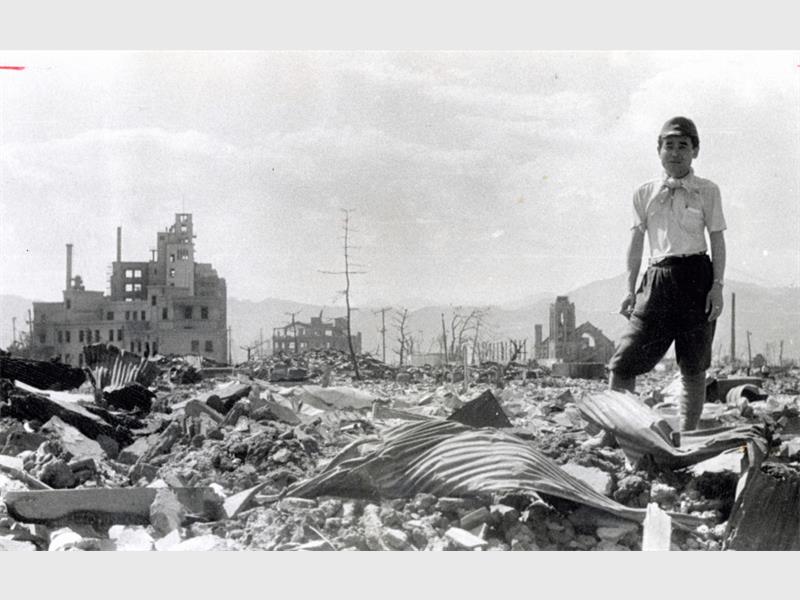
Shortly after 8am (Japanese local time) on 6 August 1945, the Enola Gay dropped the Little Boy atomic bomb on the city of Hiroshima, Japan, killing 80 000 people immediately.
US President Harry Truman, discouraged by the Japanese response to the Potsdam Conference’s demand for unconditional surrender, made the decision to use the atom bomb to end the war in order to prevent what he predicted would be a much greater loss of life were the United States to invade the Japanese mainland.
And so on 5 August 1945, while a “conventional” bombing of Japan was under way, Little Boy, (the nickname for one of the two atom bombs available for use against Japan), was loaded onto Lieutenant Colonel Paul Tibbets’ plane on Tinian Island in the Marianas. Tibbets’ B-29, named the Enola Gay after his mother, left the island at 2.45am on 6 August.
Five-and-a-half hours later, Little Boy was dropped, exploding approximately 580m above a hospital, unleashing explosive power equivalent to that of 12 500 tons of TNT. The bomb had several inscriptions scribbled on its shell, one of which read “Greetings to the Emperor from the men of the Indianapolis” (the ship that transported the bomb to the Marianas).
There were 90 000 buildings in Hiroshima before the bomb was dropped; only 28 000 remained after the bombing. Of the city’s 200 doctors before the explosion, only 20 were left alive or capable of working. There were 1 780 nurses prior to the bombing, but only 150 survived and were able to tend to the sick and dying.
According to John Hersey’s classic work, Hiroshima, the Hiroshima city government had put hundreds of schoolgirls to work clearing fire lanes in the event of incendiary bomb attacks. They were out in the open when the Enola Gay dropped its load.
There were so many spontaneous fires as a result of the bomb that a crewman of the Enola Gay stopped trying to count them. Another crewman is reported to have remarked, “It’s pretty terrific. What a relief it worked.”
Approximately 80 000 people were killed as a direct result of the blast, and another 35 000 were injured, while a further 60 000 were dead by the end of the year, from the effects of the radioactive fallout.
Do you perhaps have more information pertaining to this story? Email us at roodepoortrecord@caxton.co.za (remember to include your contact details) or phone us on 011 955 1130.
For free daily local news on the West Rand, also visit our sister newspaper websites
Remember to visit our Facebook, Twitter and Instagram pages to let your voice be heard!


