
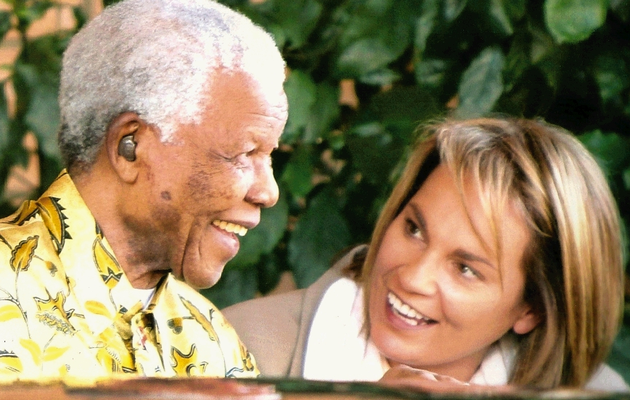
The late Nelson Rolihlahla Mandela will always be remembered for – among many other reasons – wearing colourful, loose-fitting silk shirts.
These signature shirts were quickly dubbed the ‘Madiba Shirt’, but what is the story behind them?
In 1994, struggling fashion designer Desré Buirski received a tip-off that altered the course of her life. She heard that the world’s most famous freedom fighter, Nelson Mandela, would be visiting a synagogue near her home in Cape Town, and she wanted to give him something special as a gift.
She went digging through her cupboard and found a long-sleeved black silk man’s shirt she’d made. It had gold and cream fish patterns embroidered on it.
She gave the package to Madiba’s body guard, with a note saying “Thank you for everything you have done and the sacrifices you have made for our beloved country”.
The style of the Madiba Shirt evolved as Madiba requested various shirts throughout his time as President, among them a collection of special black silk shirts for his state visit to Britain where he met the Queen at Buckingham Palace.
Desré had designed many printed and embroidered shirts for the icon, in addition to the more than 150 hand-painted silk shirts Madiba wore on the world stage, setting a global trend.
Since then, some of the greatest men of our time have worn various styles of the Madiba Shirt, and it continues to project confidence and individuality.
Do you perhaps have more information pertaining to this story? Email us at roodepoortrecord@caxton.co.za (remember to include your contact details) or phone us on 011 955 1130.
For free daily local news on the West Rand, also visit our sister newspaper websites
Remember to visit our Facebook, Twitter and Instagram pages to let your voice be heard!


