
Today in History: General Christiaan de Wet found guilty of treason
He was convicted of high treason in the Bloemfontein High Court on 15 June, 1915.
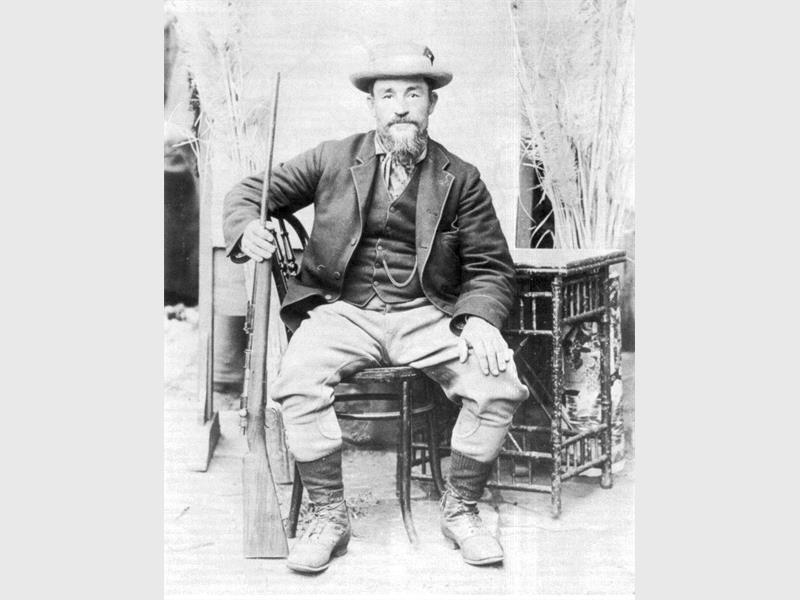
General Christiaan Rudolph de Wet was a Boer soldier and statesman, and is regarded by some as one of the greatest Boer heroes.
He became a legend within Boer ranks as the commander-in-chief of the Orange Free State forces during the second Anglo-Boer War (1899–1902) and as a leader in the Maritz Rebellion of 1914.
From 1907 to 1910, De Wet served as Minister of Agriculture in the Orange Free State and participated in the convention of 1908/ 09 that framed the constitution of the Union of South Africa.
The Maritz rebellion started in part because of opposition to the South African government’s decision to invade the then German territory of South-West Africa (now Namibia).
The decision to invade came about after the British government asked Prime Minister Louis Botha whether his forces would invade the territory, to which he replied that they could, and would.
Commandant-General of the Union Defence Force, Brigadier-General Christiaan Frederick Beyers opposed the decision to undertake offensive operations, and resigned his commission on 15 September 1914, writing “It is sad that the war is being waged against the ‘barbarism’ of the Germans. We have forgiven but not forgotten all the barbarities committed in our own country during the South African War,” a reference to the atrocities committed by the British forces during the Boer War.
De Wet was tasked with leading the Lydenburg Commando during the rebellion and managed to take possession of the town of Heilbron, held up a train and captured government stores and ammunition.
Some of the prominent citizens of the area joined him, and by the end of the week he had a force of some 3 000 men.
Beyers also gathered a force in the Magaliesberg area and in all, about 12 000 rebels rallied to the cause.
Ironically, about 20 000 of the 32 000 troops General Louis Botha had to counter the rebels were Afrikaners.
De Wet’s efforts in the rebellion led to his capture in the Waterberg area, near Vryburg on 20 November 1914. He was incarcerated with a number of other rebel leaders in the Johannesburg Fort until his appearance and conviction in Court.
He was convicted of high treason in the Bloemfontein High Court on 15 June 1915 and sentenced to six years’ imprisonment and a fine of £2 000. His fine was paid within a few months, with voluntary contributions from his supporters.
In response to representations made by several influential people and a procession of women to the Union Buildings, the government granted him a reprieve from the six-year prison sentence.
Do you perhaps have more information pertaining to this story? Email us at roodepoortrecord@caxton.co.za (remember to include your contact details) or phone us on 011 955 1130.
For free daily local news on the West Rand, also visit our sister newspaper websites
Remember to visit our Facebook, Twitter and Instagram pages to let your voice be heard!


