
Today in History: Massive earthquake in 1897 killed thousands in India
The earthquake was felt all over an area that is larger than the entire Northern Cape province.
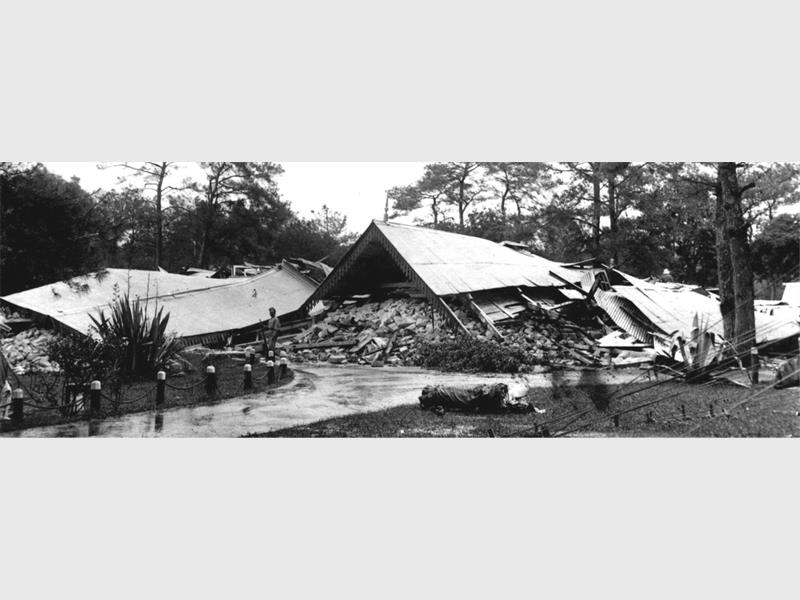
The quake, with a devastating 8.8 magnitude on the Richter Scale, struck at 5pm near the town of Shillong in northern India, killing thousands in the process.
The earthquake was so powerful that it was felt in an area of approximately 650 000km², and left buildings in ruin in an area of about 400 000km², both areas larger than the entire Northern Cape.
This area is close to the Himalayan mountain range, which was formed by the Indian tectonic plate driving into the Asian plate.
This interaction of the earth’s plates created a huge fault line in the area that is prone to strong tremors.
The earthquake resulted in Shillong Plateau being thrust violently upwards by about 11m.
The fault was about 110km in length, while the fault slip was about 18m.
At the epicentre, vertical acceleration is thought to have been above 1G force, with a surface velocity of 3m per second.
In Shillong, the earthquake damaged every stone house and half the houses built of wood, levelling the area and resulting in 13 deaths.
In Cherrapunji, it resulted in a landslide, which led to 600 deaths.
In Goalpara, it resulted in waves from the river Brahmaputra, on which the town is situated, destroying the market.
In Guwahati, the earthquake lasted for three minutes, and the Brahmaputra river rose by 2,3m.
The final death toll is thought to be 1 542 people, including the nearly 600 who lost their lives to the landslide in Cherrapunji.
For hundreds of miles around the epicentre, nearly every building collapsed.
Hundreds of aftershocks in the following months delayed the rebuilding efforts, with the last seismic event being felt on 9 October 1897 at 1.40am in Calcutta.
Do you perhaps have more information pertaining to this story? Email us at roodepoortrecord@caxton.co.za (remember to include your contact details) or phone us on 011 955 1130.
For free daily local news on the West Rand, also visit our sister newspaper websites
Remember to visit our Facebook, Twitter and Instagram pages to let your voice be heard!


