
Today in History: Joan of Arc was martyred
Joan was born in 1412, the daughter of a tenant farmer at Domremy, on the borders of the duchies of Bar and Lorraine.
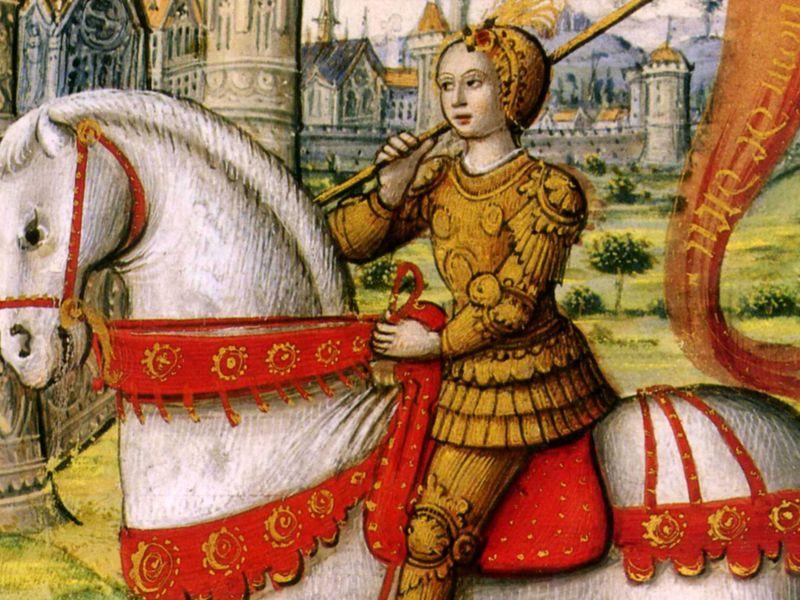
Joan of Arc became a French war hero after she received ‘divine instructions’ to join the French forces in their fight against the British.
Joan began hearing the ‘voices’ of three Christian saints – St Michael, St Catherine, and St Margaret – when she was about 13. These voices eventually ‘told’ her to aid the Dauphin (heir-apparent) in capturing Reims and therefore the French throne.
In May 1428, she travelled to Vaucouleurs, a stronghold of the Dauphin, and told the captain of the garrison of her visions. He turned her away.
She returned in January the following year, and the captain, impressed by her determination, agreed to allow her passage to the Dauphin at Chinon.
She reached the Dauphin’s castle at Chinon in February 1429 and was granted a meeting with Charles (the Dauphin) and his courtiers.
Charles provided her with a small army, and on 27 April 1429, she set out for Orleans.
On 29 April, as a French attack distracted the English troops on the west side of Orleans, Joan entered the town through its eastern gate.
She brought greatly needed supplies and reinforcements to the French in Orleans.
She personally led the resistance against the English and on 7 May was struck by an arrow. After dressing her wound, she returned to the fight and the French won the day.
Over the next five weeks, Joan and the French commanders led the French to a string of victories over the English.
On 16 July, the royal army reached Reims, which opened its gates to Joan and the Dauphin. The next day, Charles VII was crowned king of France. After the ceremony, she knelt before Charles, joyously calling him king for the first time.
On 23 May 1430, while leading an attack against the Burgundians in Compeigne, Joan was captured.
The Burgundians sold her to the English, and in March 1431 she went on trial before clerical authorities in Rouen on charges of heresy.
Her most serious crime, according to the tribunal, was her rejection of church authority in favour of direct inspiration from God.
After refusing to submit to the church, she was sentenced to be turned over to secular authorities and executed.
Joan agreed to renounce her ‘beliefs’ and was condemned instead to perpetual imprisonment. Ordered to put on women’s clothes, she obeyed, but a few days later the judges went to her cell and found her dressed in male attire again. When questioned, she told them that St Catherine and St Margaret had reproached her for giving in to the church against their will.
On 29 May she was found to be a relapsed heretic and ordered to be handed over to secular officials.
At the age of 19, on 30 May 1430, Joan was burned at the stake at the Place du Vieux-Marche in Rouen.
Before the pyre was lit, she instructed a priest to hold a crucifix high so that she could see it, and to shout out prayers loud enough to be heard above the roar of the flames.
Do you perhaps have more information pertaining to this story? Email us at roodepoortrecord@caxton.co.za (remember to include your contact details) or phone us on 011 955 1130.
For free daily local news on the West Rand, also visit our sister newspaper websites
Remember to visit our Facebook, Twitter and Instagram pages to let your voice be heard!


