
Today in History: Revisiting the famous ‘Dr Livingstone, I presume?’ conversation 145 years after his death
The first European to witness the Mosi-o-Tunya waterfall, David Livingstone, was an iconic 19th century explorer who died on this day in 1873 due to malaria.
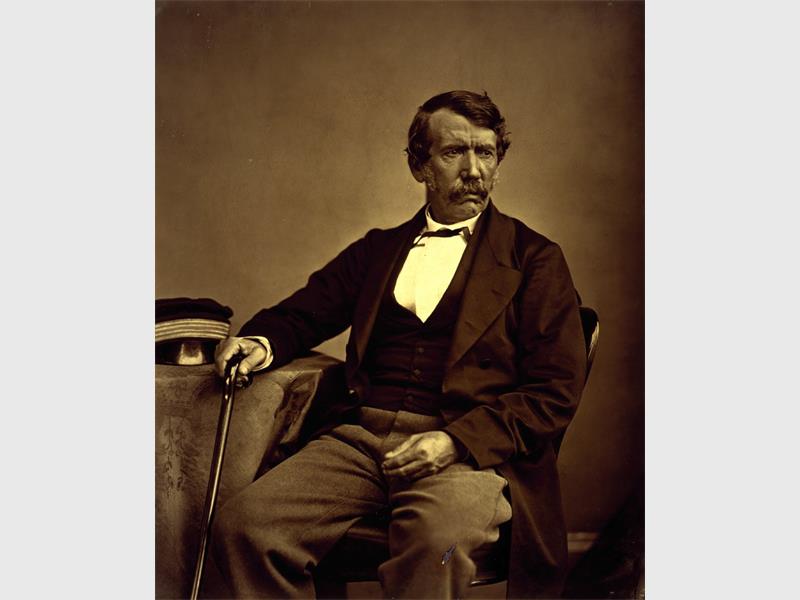
Livingstone was born in Blantyre, South Lanarkshire, Scotland on 19 March, 1813 and became an icon all over Great Britain in the 19th century, as a result of his travels across Africa.
Despite being best-known for his exploration of Africa, Livingstone was also a pioneering medical missionary, scientific investigator, an anti-slavery crusader and an enthusiastic supporter of colonial expansion and trade.
While many believe that when Livingstone set out to look for the source of the Nile River, he was doing so for the purpose of colonial expansion, the contrary was in fact the truth.
To him, geographical accomplishments came second only to his passionate desire to end the East African Arab-Swahili slave trade.
Livingstone is reported to have said: “The Nile sources are valuable only as a means of opening my mouth with power among men. It is this power with which I hope to remedy an immense evil.”
Despite never finding the source of the Nile, he did become the first European to visit the Mosi-oa-Tunya (the “Smoke that Thunders) waterfall, which he would in turn name after his queen, leading to the name we know it by today – Victoria Falls.
He later said of the waterfall and its surrounds: “Scenes so lovely must have been gazed upon by angels in their flight.”
After he had not been heard from for a good while, a journalist by the name of Henry Morton Stanley was commissioned to find Livingstone in 1869.

Stanley would eventually cross paths with Livingstone in the town of Ujiji in what is now Tanzania, on the shores of Lake Tanganyika in 1871.
In a biography of Livingstone published in 1890, the encounter was retold by Livingstone’s family as they were told by Stanley himself.
The conversation that led to the famous phrase, “Dr Livingstone, I presume?” (quoted from the Very Reverend William Garden Blaikie’s The Life of David Livingstone) is quoted below:
” ‘As I advanced towards him,’ says Mr Stanley, ‘I noticed he was pale, looking wearied, had a grey beard, wore a bluish cap with a faded gold band round it, had on a red-sleeved waistcoat and a pair of grey tweed trousers.
‘I would have run to him, only I was a coward in the presence of such a mob – would have embraced him, only he being an Englishman, I did not know how he would receive me; so I did what cowardice and false pride suggested was the best thing – walked deliberately to him, took off my hat and said:
‘Dr Livingstone, I presume?’
‘Yes,’ said he, with a kind smile, lifting his cap slightly.
I replace my hat on my head, and he puts on his cap, and we both grasp hands, and then I say aloud:
‘I thank God, Doctor, I have been permitted to see you.’
He answers: ‘I feel thankful that I am here to welcome you.’ ”
A greeting hardly as stirring as “Veni, vidi, vici”, or “I have a dream”, but the words became famous, partly because of their humour – apart from Livingstone and Stanley themselves, there was no white man around for hundreds of kilometres!
David Livingstone died two years later at the age of 60, on 1 May 1873, from malaria.
Do you perhaps have more information pertaining to this story? Email us at roodepoortrecord@caxton.co.za (remember to include your contact details) or phone us on 011 955 1130.
For free daily local news on the West Rand, also visit our sister newspaper websites
Remember to visit our Facebook, Twitter and Instagram pages to let your voice be heard!


