
Residents to consider alternative burial options
“It is our responsibility, as the current leaders, to ensure that future generations do not inherit the burden of managing cemeteries that have reached full capacity, without educating our residents on alternative burial options”.
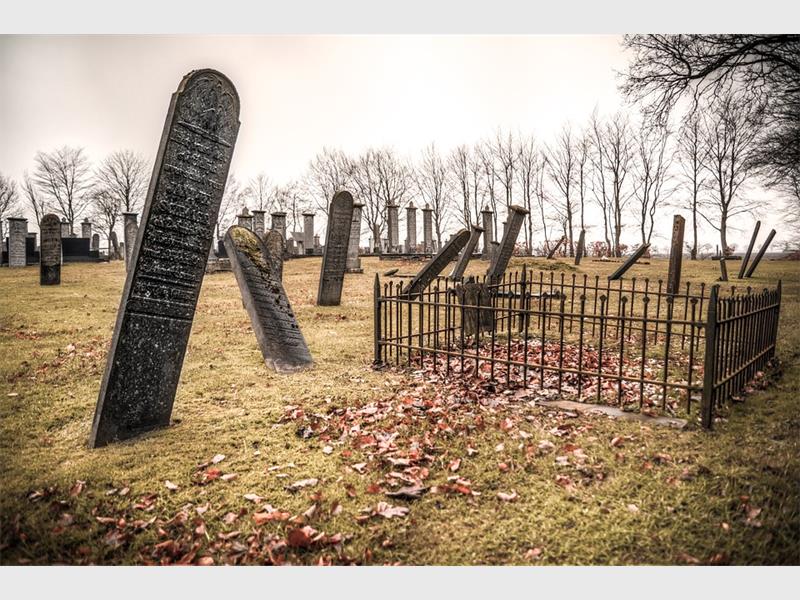
Due to the rapid annual growth of the world’s population, it is being said that residents of cities like Johannesburg need to consider other methods of interment. This is because of the environmental and economic costs of the management of cemeteries that become dormant once they have reached full capacity.
According to Our World in Data, between 1900 and 2000, the increase in the world’s population was three times greater than during the entire previous history of humanity, an increase from 1,5 billion to 6,1 billion in just 100 years.
In a recent media statement by City of Joburg Member of the Mayoral Committee for Community Development, councillor Nonhlanhla Sifumba, she stated that,
“Johannesburg City Parks and Zoo (JCPZ), the custodians of the City of Joburg’s cemeteries, parks, zoo and designated public open spaces, is at the forefront of this change. Although the City has adequate burial space for at least the next 50 to 70 years, without considering plans to develop more cemeteries, it is looking at more sustainable and even environmentally-friendly alternatives”.
She continued, saying that “It is our responsibility, as the current leaders, to ensure that future generations do not inherit the burden of managing cemeteries that have reached full capacity, without educating our residents on alternative burial options”.
Of the 32 cemeteries across Joburg, only four have not yet reached full capacity. Westpark, Olifantsvlei, Diepsloot and Waterval cemeteries are still able to house over one million future graves.
Although there are quite a few different alternative burial options available, JCPZ is encouraging residents to consider utilising the same gravesite for the entire family. This has the potential to increase burial space significantly and will reduce the need for more cemeteries, like the recently opened Olifantsvlei Cemetery.
Cremations, which are considered by some families as a viable alternative to a traditional burial, have seen a slight year-on-year increase. The average number of cremations at the Braamfontein and Lenasia crematoria is about 315 per month. New memorial walls are currently being erected at Westpark Cemetery. Here, the family can erect a plaque in memory of a loved one who has been cremated.
Still, JCPZ is mindful that there are religious and traditional constraints regarding cremations.
The entity is therefore prioritising the importance of increasing awareness levels on the option for ‘reopenings’, ie, burying loved ones in the same grave as a family member. This will effectively ensure that all 32 cemeteries are active and fully utilised.
“There is also the option of ‘grave reduction’ which is reburying the remains of a long lost family member in a smaller urn, and then re-utilising the same grave for the rest of the family. The burial site thus becomes a family gravesite that can be used for generations,” said the MMC.
Being buried in the same grave is more affordable, has huge cost-savings for ratepayers, is environmentally friendly and affords families a central point to pay tribute and conduct religious ceremonies if needed.
Another option, which is rarely utilised, is making use of the mausoleums in the Westpark Cemetery. These sites are privately managed and afford families the option to consider above-ground burials in a free-standing tomb, where a number of caskets can be accommodated.
Sifumba also mentioned that residents should remember that they choose to be buried in whichever way they prefer, as long as it is dignified. Opting to have a tree planted on the gravesite or to be cremated and a tree planted in the cemetery as more symbolic options are also some of the requests that Joburg City Parks and Zoo is engaging residents with.
The MMC stated that, “For some people it is comforting to know that the memory of their loved one lives on, in the growth of the tree, instead of in a dormant grave.
“With a population of close to five million and growing, the City of Joburg needs to continually interrogate and educate residents on alternative burial methods,” she added.
She also said that life expectancy in Gauteng has increased by 10 years since 2001, as determined by Statistics South Africa in their 2017 mid-year population estimates. Men are now expected to live an average of 64 years and women 69 years. These statistics are supported by the decrease in the burial rate in Joburg which peaked at 27 000 per annum in the early 2000s but currently averages 17 000 per annum. One should, however, also take into consideration that Joburg has a large transitional workforce from areas outside the City who prefer to be interred in their home cities.
In conclusion, the MMC reinforced that, “Residents and families are being called on to explore alternative burial options without infringing on customs and traditions and to further respect the sanctity of cemeteries. Joburg Parks and Zoo is committed to maintaining cemeteries to uphold the dignity of loved ones that have been laid to rest.”
Residents may report vandalism and service shortfalls to 011 375 5555.
Do you perhaps have more information pertaining to this story? Email us at roodepoortrecord@caxton.co.za (remember to include your contact details) or phone us on 011 955 1130.
For free daily local news on the West Rand, also visit our sister newspaper websites
Remember to visit our Facebook, Twitter and Instagram pages to let your voice be heard!


