
Five things you might not have known about Albert Einstein
Albert Einstein is perhaps best known for his theory of relativity (E=MC²) as well as the letter he wrote to then-president of the United States of America, Franklin Roosevelt in 1939, suggesting that they needed to conduct research on atomic energy.
The letter to Roosevelt led to the formation of the Manhattan Project, which led to the nuclear bombings of Hiroshima and Nagasaki in 1945.
All nuclear things aside, there are still a couple of facts you might not have known about Einstein, and we’ve listed five of them below.
1. He never wore socks
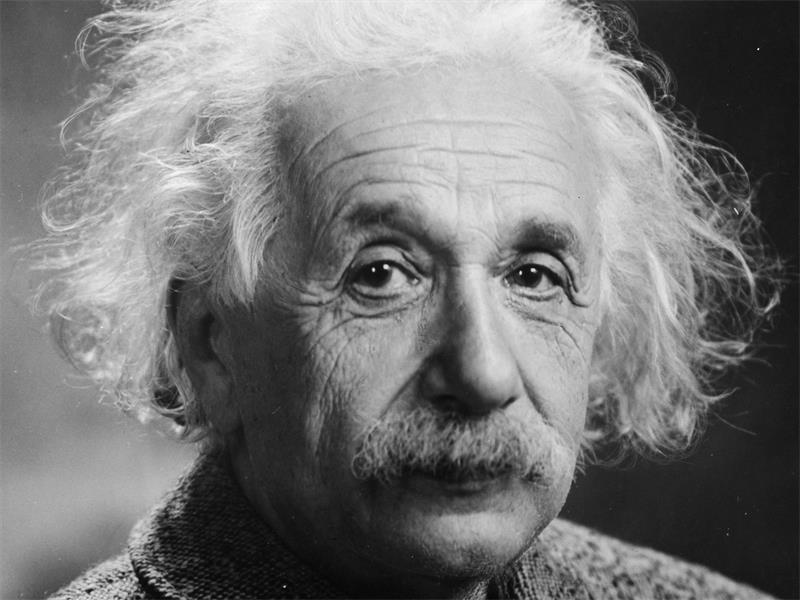
Part of Einstein’s being was his signature dishevelled look.
In addition to his uncombed hair, one of Einstein’s beautifully strange habits was to never wear socks. Whether he was out sailing, or attending the most serious of formal functions, he never wore socks.
In Einstein’s eyes, socks were a pain because they often got holes in them.
2. Offered to be president
A few days after Zionist leader and first President of Israel, Chaim Weizmann, died on 9 November 1952, Einstein was asked if he would accept the position of the country’s second president.
Einstein, aged 73, declined the offer. In his official letter of refusal, he stated that he not only lacked the “natural aptitude and the experience to deal properly with people,” but also, he was getting old.
3. His brain isn’t cremated
When Einstein died in 1955, his body was cremated and his ashes scattered, as was his wish.
However, before his body was cremated, pathologist Thomas Harvey at Princeton Hospital conducted an autopsy and removed Einstein’s brain.
Finally, in 1998, Harvey returned Einstein’s brain to the pathologist at Princeton Hospital.
4. He married his cousin
After Einstein divorced his first wife, Mileva Maric in 1919, he married his cousin, Elsa Loewenthal (née Einstein).
Albert’s mother and Elsa’s mother were sisters, plus Albert’s father and Elsa’s father were cousins.
5. A compass sparked his scientific interest
When Albert Einstein was five years old and sick in bed, his father showed him a simple pocket compass. The boy was mesmerised. What force exerted itself on the little needle to make it point in a single direction?
This question haunted Einstein for many years and has been noted as the beginning of his fascination with science.
Do you perhaps have more information pertaining to this story? Email us at northsider@caxton.co.za (remember to include your contact details) or phone us on 011 955 1130.
For free daily local news on the West Rand, also visit our sister newspaper websites
Randfontein Herald


