
World Press Freedom Day – Is press freedom under fire?
Many believe South Africa is turning into a surveillance state.
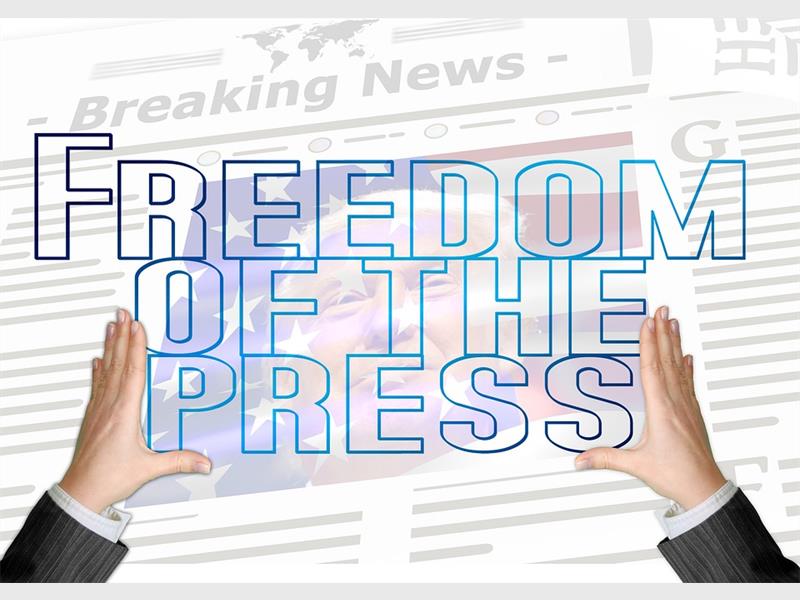
On 3 May, World Press Freedom Day is celebrated across the Globe.
According to Unesco, who initiated the celebration, “the day celebrates the fundamental principles of press freedom; to evaluate press freedom around the world, to defend the media from attacks on their independence and to pay tribute to journalists who have lost their lives in the exercise of their profession.
Read more: On this day in history
“World Press Freedom Day was proclaimed by the UN General Assembly in 1993 following a Recommendation adopted at the twenty-sixth session of Unesco’s General Conference in 1991. This in turn was a response to a call by African journalists who produced the landmark Windhoek Declaration on media pluralism and independence in 1991.
“It serves as an occasion to inform citizens of violations of press freedom – a reminder that in dozens of countries around the world, publications are censored, fined, suspended and closed down, while journalists, editors and publishers are harassed, attacked, detained and even murdered.
“It is a date to encourage and develop initiatives in favour of press freedom, and to assess the state of press freedom worldwide.”
3 May acts as a reminder to governments of the need to respect their commitment to press freedom and is also a day of reflection among media professionals about issues of press freedom and professional ethics. Just as importantly, World Press Freedom Day is a day of support for media that are targets for the restraint, or abolition, of press freedom. It is also a day of remembrance for those journalists who lost their lives in the pursuit of a story.”
According to a South African activist group that focuses on issues surrounding press freedom, South Africa is gradually turning into a police state. In a statement they said that, “Surveillance is a growing threat to journalists. The Snowden leaks were a warning in bold of just how widespread mass surveillance abuses are among so-called established democracies.
“In South Africa, journalists should be concerned about the same. Our intelligence services are notoriously opaque and are not immune to political interference. Problems in the law, in particular RICA, as well as weak and inefficient oversight mechanisms (we’ve been without an Inspector General of Intelligence for over a year now) make it easy for those within state security structures to spy on journalists and media workers for political ends.
“On 6 May 2016, the Specialised Commercial Crime Court heard the first case of illegal surveillance against journalists in post-democratic South Africa, in which members of the police’s Crime Intelligence Division are accused of tapping the phones of two Sunday Times journalists, Mzilikazi wa Afrika and Stephan Hofstatter, while they were reporting on scandals in the security structures. In the past year, it has also emerged that members of the intelligence structures bugged the phone of former Mail & Guardian journalist Sam Sole, now with the Amabhungane Centre for Investigative Journalism, while he was reporting on Jacob Zuma’s corruption charges.
“The surveillance of journalists is a clear threat to media freedom and the safety of their sources, and this points to the need for urgent reforms to RICA to prevent such abuses from taking place,” the statement concluded.
What is your view on freedom of the press in South Africa? Leave your comments in the box below.
Do you perhaps have more information pertaining to this story? Email us at roodepoortrecord@caxton.co.za (remember to include your contact details) or phone us on 011 955 1130.
For free daily local news on the West Rand, also visit our sister newspaper websites
Remember to visit our Facebook, Twitter and Instagram pages to let your voice be heard!


