
Not your average nine-to-fiver
It's eight hours of playtime, food prep and driving children around, but au pair Liesl is loving it.
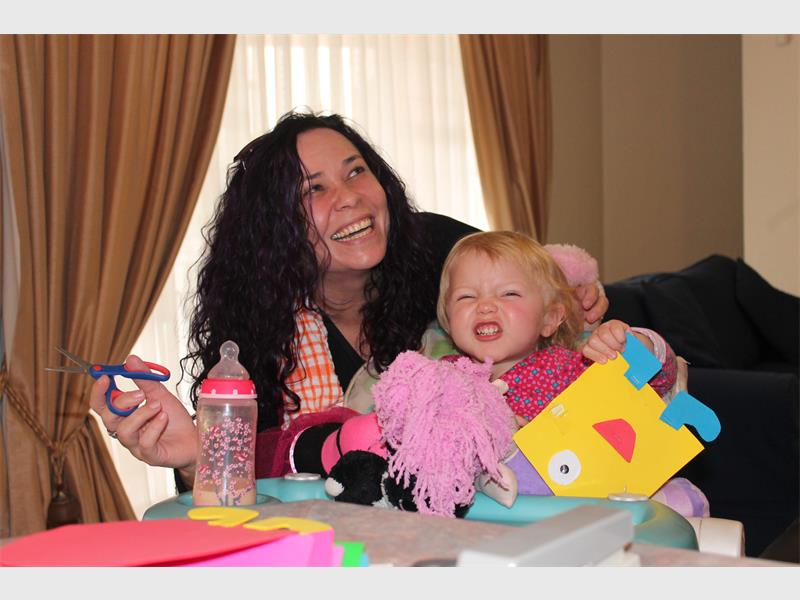
In the morning she’s up very early to drive 40 odd kilometres from Alberton to step in as mom for a toddler and a primary school child at 9 am.
Liesl Langley, 39, the Pienaar family’s “step-in mom” or au pair, has been in the industry for four and a half years and loves her job. Surely her vibrant purple hair and bohemian outfits is but part of the charm that makes the children love her. She has a bubbly personality, is a real people’s person and won’t excuse bad manners.
“Say ‘hello’ to the lady, Joanine,” she tells the two-year-old playing on the living room floor. She does what she’s told with a big smile and starts showing off her toy doll and matching pink bottle. She gets offered some milk while the Record is offered coffee; everything in the family home happens in a whirlwind of a haste and is often one of multiple tasks that need to be completed at once. Liesl is in her element nonetheless.
“Young girls often think this is an easy job and that they’ll be able to handle playing with kids,” she says while making coffee and rearranging the kitchen-counter-turned-craft-table, “but it is so much more”.
“You need to be a responsible person to handle this job – these people trust you with their own flesh and blood – and you need to be sensible about things.”
She finally sits down in the living room and tells of the daily tasks and how fun they can be. She spends most of her morning eating, playing, dancing and crafting with little Joanine and ensures she takes a nap before they fetch her brother, 6, from school. Then it is time for homework, and some more play time. On some afternoons swimming practices and other activities keep them busy. She also tends to the children’s social lives, their play dates and any party they get invited to. She keeps to a rigorous schedule of afternoon activities, possible doctor’s appointments and whatever else they need to do. To keep in touch with the mother she writes a diary of the day’s happenings, in which she often finds a note back from her the next morning.
“This is not the first family I’ve worked for,” the au pair who has worked for a Sandton family before, says.
“I would say it takes a year to properly get to know the children you entertain and parents you work for.
“If you’re lucky, you find a wonderful family that you’re not only on the same page with, but who also cares for you and your people.”
It has its possible problems as a career, she said. When a family goes on vacation, it goes without saying that this counts as the au pair’s leave, as well. This Liesl learned the hard way one year, and she advises aspirational au pairs to keep informed about family holidays and weekends away.
Although Liesl has not faced it herself, she says au pairs are often asked to do more than they’ve bargained for, including cooking and cleaning for the family and feeding pets.
“The key is to keep an honest relationship with your family,” says Liesl, “let them know from the start what you are willing to do and not
willing to do and take everything from there on a day-to-day basis.”
“Don’t think by any means this is an easy job; I enjoy it because I’m an extrovert and a drama queen but when a child is sick, it weighs down on
you, when their appointments start clashing, it weighs down on you and when they’re upset, you often feel it, too.”
Liesl said that it is not always easy to keep calm and collected and to be as happy-go-lucky as au pairs are expected to be.
“However, if you’re having a really bad morning and you get to work it often takes just one smile from one of them and your mood is lifted once
again.”
Earning expectations
According to au pair job searching website Au Pair SA, a basic au pair salary is usually between R45 and R75 per hour depending on one’s experience and qualifications as well as the number of hours worked per week.
An inexperienced au pair working 20 hours or more a week could earn between R45 and R50 per hour; if she works for 10 hours or less she can expect to earn roughly R55 to R65 per hour. Experienced au pairs can earn around R55 to R65 per hour and R65 to R75 per hour respectively for these types of positions.
On average, a full-time au pair working around 40 hours per week should earn between R7 000 and R10 000 a month if they are required to have their own vehicle, else R5 000 to R7 000 is the going rate.
Live-in au pairs earn slightly less since they receive free accommodation in addition to their basic salary.
Families often compensate for petrol used with a petrol allowance; some families even have a vehicle of their own available for the au pair’s use, said Liesl.
Other special benefits such as meals, a cell phone allowance, the use of their vehicle and accommodation may also be offered.
Au pairs could work half days or full days five days a week or less, depending on the family’s needs. They are often asked to work during school holidays, on some nights and over weekends.


