
Documenting an unsung hero
Local film director documents the life and times of Ahmed Timol.
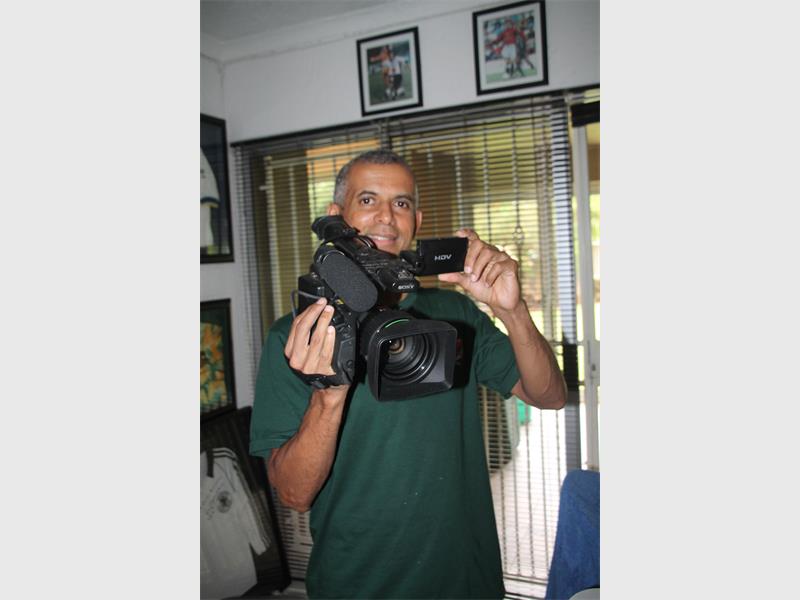

Few people outside the South African film industry would know the name Enver Samuel, even less so that he is a Roodepoort resident.
Samuel though is one of the most prolific directors in the South African film and television industry, having worked on projects such as Survivor, Master Chef and Studio 23 and now he has finished what he loves most — documentary making.
The documentary Indians can’t fly is about Ahmed Timol an unsung hero of the apartheid era. Timol was also a resident of Roodepoort. The documentary which was made by Samuel and Timol’s nephew Imtiaz Cajee, is based on Cajee’s book ‘Timol: a quest for justice’.The blurp on the back of the book explains best what the documentary is about, saying Timol “is one of the most celebrated murder victims of apartheid South Africa…The technique of ‘defenestration’ – being teasingly dangled and sometimes dropped by accident or on purpose, from a high police window – was immortalized in his own death. So was the chilling term that Security Police would use to mock his fate, “Indians can’t fly”.
On 27 October, 1971, Timol plunged ten storeys and hit the ground under bushes at Johannesburg’s notorious John Foster Square police station…”.
Indians can’t fly tells the story of Timol’s life and the events leading up to his death through Cajee’s eyes.
Enver explained his motivation behind the documentary.
“As a film maker I am always looking for stories. In 1996 I read an article in the Sunday Times about Timol. I put it away in my study and forgot about it.
“Due to the fact that I am a very prolific director I never got a chance to work on my own projects but in November 2011 the SABC issued briefs for documentaries. Then I remembered the article in my study. The story fascinated me and my sixth sense as a director told me this is the story I want to tell,” said Samuel.
“Because Timol is unknown I thought it would be important for the born-frees to know about the horrid crimes that was commited in the name of apartheid.”
“I also discovered Cajee’s book and after doing some investigative work made contact with Cajee. This made the process much easier having the family involved. Not writing from the outside but from the inside of the devil’s lair,” said Samuel.
He wants to concentrate on doing more documentaries now because they “give you more of a sense of having created something concrete”. He also says he prefer the independant way because it gives him ownership of his work.
Samuel is off to Toronto, Canada, in April where Indians can’t fly will be screened at the Hot Dogs Documentary Festival.
He had some advice for young people who want to go into the film making industry.
“There is an ever increasing amount of film schools opening in South Africa. They should choose a good one and study their craft. To stand out from the crowd they must be prepared to work hard long hours and sacrifice their time to show their dedication. They must also know how to think outside the box,” concluded Samuel.


