
Life is better in the country – Stats SA
Close to 83 per cent satisfied with service at public health care facilities.
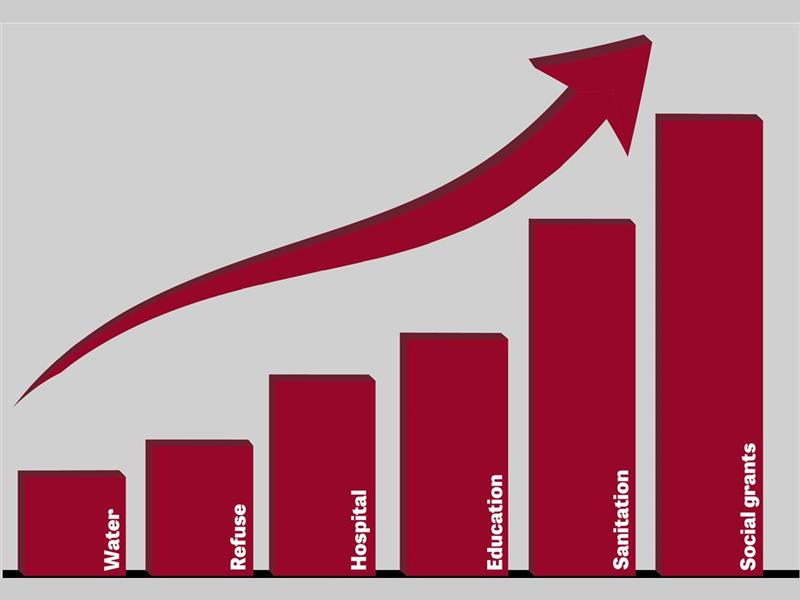
A recent survey by Stats SA suggests life is somewhat better in the country.
This after Deputy Director General of Population and Social Statistics, Kefiloe Masiteng released the latest results of the General Household Survey (GHS) conducted by Stats SA between January and December 2013.
The survey explains why life is better in the country as follow:
• More people rely on state coffers as the percentage of individuals that benefited from social grants has increased from 12,7 per cent in 2003 to 30,2 per cent in 2013, and the percentage of households that received at least one grant increased from 29,9 per cent to 45,5 per cent.
• The survey further indicates that 73,5 per cent of persons aged between 5 and 24 was attending educational institutions, which is about the same as in 2002 when the attendance rate was 73,6 per cent. A lack of money for fees remains the primary reason for a large proportion of individuals in this age group not studying. A quarter (25,3 per cent) of premature school leavers in this age group blamed ‘a lack of money’ for not studying. The comparable figure is as high as 44,9 per cent in KwaZulu-Natal. The percentage of pupils who reported that they paid no tuition fees increased from 0,4 per cent in 2002 to 62,4 per cent in 2013. Provinces with the highest proportion of non-payers were Limpopo (88,8 per cent) and Eastern Cape (73,5 per cent). Learners were least likely to benefit from the ‘No fee’ system in Gauteng (31,7 per cent) and Western Cape (27 per cent).
• The GHS also reveals that 69,9 per cent of households went to public clinics and hospitals first when household members fell ill or got injured. By comparison, a quarter (24,2 per cent) of households indicated that they would go to private doctors. A further 4,7 per cent preferred private clinics or hospitals. Most households (92,1 per cent) used the nearest facility. The study found that 82,5 per cent of households that attended public health care facilities either was very satisfied or satisfied with the service they received compared to 98 per cent of households that attended private health care facilities and was satisfied. A slightly larger percentage of households that attended public facilities (5,7 per cent) as opposed to private facilities (0,7 per cent) were very dissatisfied with the service they received.
• Although 89,9 per cent of South African households had access to piped water in 2013, only 77,5 per cent of Limpopo households enjoyed such access. This situation, however, does represent a substantial improvement over 2002 when only 73,9 per cent of households in this province had access to piped water.
• Nationally 63,2 per cent of households rated the quality of water-related services they received as good. Satisfaction, however, has been eroding steadily since 2005 when 76,4 per cent of users rated the services as good. Residents of the Free State, Mpumalanga and the Eastern Cape consistently have been the least satisfied with the quality of water. In 2013, 18,1 per cent of households in the Free State felt that their water smelled bad, compared to 12 per cent of Mpumalanga households. Only 1,7 per cent of the Western Cape households expressed such a complaint. Free State households rated their water as unsafe to drink (17,3 per cent), not clear (20,1 per cent) and not tasting well (19,7 per cent).
• The percentage of households with no toilets or bucket toilets decreased from 12,3 per cent in 2002 to 5,3 per cent in 2013. Households in the Eastern Cape (10 per cent), Free State (7,7 per cent) and Northern Cape (7,4 per cent) were most likely to lack access to toilet facilities or to still use bucket toilets. The percentage of households that have access to improved sanitation facilities, however, improved to 77,9 per cent, up from 62,3 per cent in 2002.
• More than a quarter of households that shared toilet facilities complained about the poor hygiene (25,6 per cent) and poor lighting (25,1 per cent) at these facilities. A further 22 per cent felt that their physical safety were threatened when they had to use the facilities, while 13,1 per cent of households felt that the toilets were not adequately enclosed.
• The percentage of households for which refuse were removed at least once per week increased from 56,7 per cent in 2002 to 63,5 per cent in 2013. Concurrently the percentage of households that had to rely on own refuse dumps or communal refuse dumps respectively declined from 31,8 per cent to 29,2 per cent and 3,1 per cent to 1,6 per cent. Large variations, however, remain between rural and urban areas. While 89,2 per cent of households in metropolitan areas, and 84,3 per cent of households in urban areas could rely on weekly kerbside removal, this was the case for only 6,9 per cent of rural households. By comparison, 86,5 per cent of rural households used their own refuse compared to 9 per cent of urban and 4,2 per cent of metro households.
The full report is available on the Statistics South Africa website: www.statssa.gov.za


