
72 per cent of Gauteng users not e-tagged
"Registered e-tolls registered users not what is being advertised by Sanral."
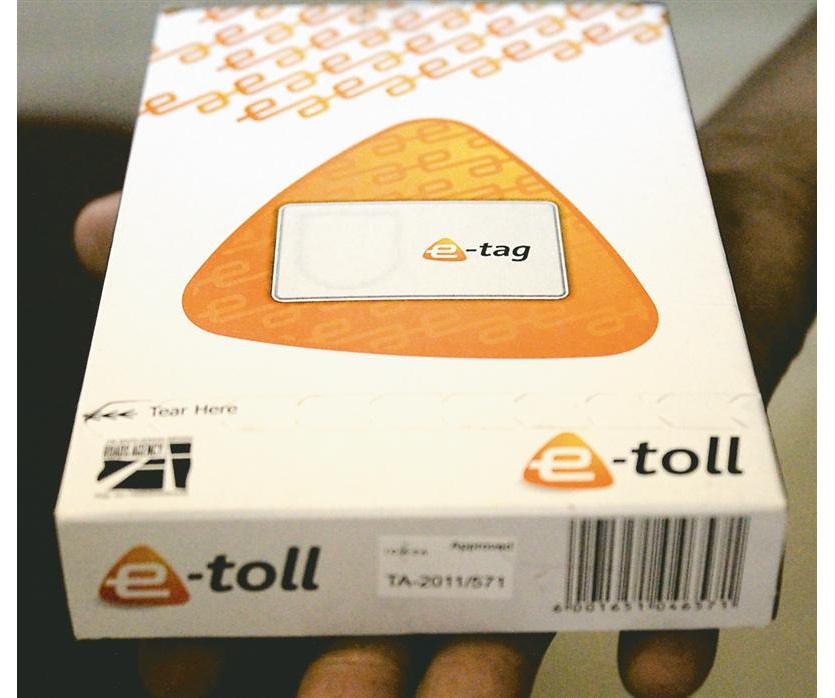
Justice Project South Africa was somewhat astonished to hear the truth being set forth in Parliament by Minister Dipuo Peters on Wednesday 5 March, wherein her answers to how many registrations for Sanral’s e-tolls have taken place make a complete mockery of both Sanral’s advertising and the assertions of Nazir Alli.
In her answer to the question asked by DA MP Ian Ollis as to how many registrations had taken place until 1 February 2014 she stated that the number was 912 048 registrations as at 31 January 2014 – of which 49 987 were for local, provincial and national government vehicles. It also must be borne in mind that a significant proportion of these registrations apply to vehicles exempted from paying e-tolls.
Sanral has been thanking the “more than 1,2 million registered users” of the GFIP for more than a week now – at the very least – in their radio adverts. Additionally, Nazir Alli – CEO of Sanral did the same on 28 February on the John Robbie’s show on Talk Radio 702.
“It is very difficult, if not impossible to believe that more than 287 952 new registrations had taken place in the 28 days in February, especially in light of the fact that Sanral’s repeated claims that around 35 000 registrations take place a week,” said Howard Dembovsky, Chairperson of JPSA.
“A figure of more than 10 000 registrations per day, every single day in the month of February is simply too difficult to swallow, no matter how Sanral chooses to spin it,” he continued.
Furthermore, the statement by Minister Peters that between 23 per cent and 28 per cent of the daily users of Gauteng’s e-roads have e-tags, indicates that a stunning 72 per cent don’t, which is most certainly not the impression that Sanral is portraying.
According to Sanral’s own “research”, around 2,5 million vehicles use the GFIP daily. This means that 1,8 million of them don’t have e-tags. Sanral has not hesitated to label research conducted by Outa as “unscientific”, but now it emerges that in fact, Outa’s research was anything but inaccurate.
If Sanral indeed is getting paid “more than R300 million a month” on e-tolls, as was claimed by Alli on Friday 28 February, from up to 28 per cent of their registered users and some of the unregistered users who may have paid, then the assertions by Patrick Craven of Cosatu that the e-toll tariffs are way too high hold a great deal of water.
The so-called “advantages” of e-tolling question raised by Ruth Bhengu wherein the Minister referred to the delays caused by lack of maintenance to the freeways prior to the completion of the GFIP also was laughable.
“Surely there is no roads authority, apart from Sanral and the Department of Transport, anywhere in the world that would have the audacity to even think that a roads network installed in the 1970s, more than 40 years ago, would cater for the dramatically increased vehicle population?” Dembovsky said.
“If anything, all this answer has done is highlighting how the fuel levy and other taxes have ‘evaporated’ into thin air, instead of being used to maintain, and indeed, upgrade our roads infrastructure. It is certainly no justification for e-tolling,” he continued.
“The time for Sanral to stop overtly lying to the public has long passed, as has the time for them to face reality and understand that no matter how many times a lie is repeated, it remains a lie. The people of Gauteng and South Africa do not need ‘to raise their IQ’. They are not stupid – no matter what Vusi Mona, Nazir Alli and Sanral wish to call them or suggest they do.”


